Manitoba Travel recently released this short video in a series of promotional films highlighting the incredible features of the province. This particular clip takes us on a journey from Winnipeg to Churchill and builds the anticipation for travelers heading to Churchill this year. Polar bears, beluga whales, migratory birds and incredible landscapes await those bold enough to journey north. Enjoy!
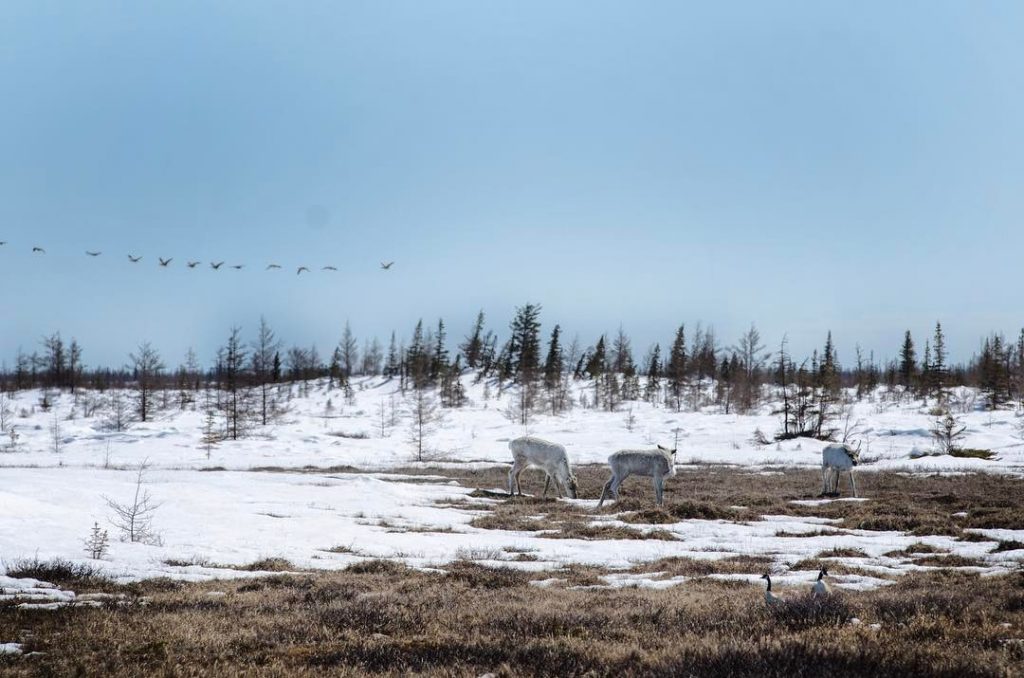
Dorota Walkoski of Great White Bear Tours captured this harbinger of spring image in Churchill. Caribou, snow geese and Canada geese fill the landscape and feed on the bounty which the north provides this time of year! Bountiful Churchill summer will be upon us soon and avid explorers will flock to town for birding excursions, beluga whale charters and tundra exploring in search of fox, polar bears, Arctic hare and even wolves. This summer on the Hudson Bay is shaping up to be one of the most exciting in recent years. Stay posted for all the news and photos from the north!
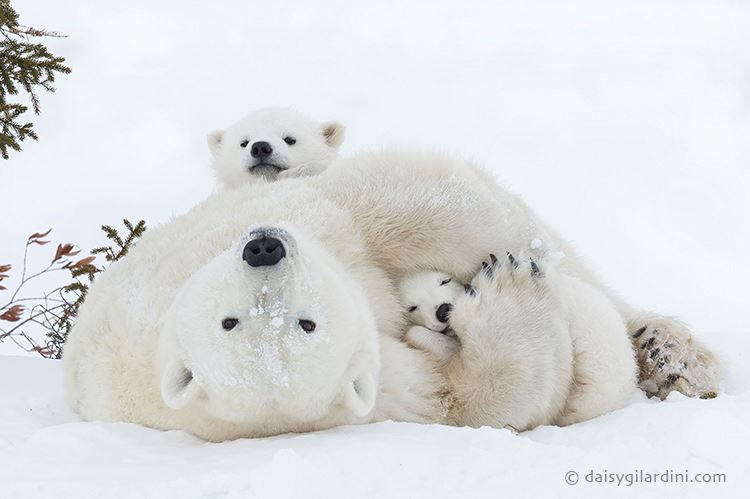
Polar bear habitat protection is becoming a hot issue. Daisy Gilardini photo.
The U.S. Supreme Court stood up against a coalition of organizations within Alaska by declining to hear a case on Monday which attempts to repeal the previous federal government administration’s policy to designate more than 187,000 square miles of Alaskan wilderness as critical habitat for threatened polar bears.
Lawsuits filed against the Interior Department by the Alaska Oil and Gas Association and the state of Alaska along with Native corporations and local governments were able to reverse the regulation in 2013 though the 9th Circuit Court of Appeals reversed that ruling.The state of Alaska and the Alaska Oil and Gas Association — joined by Native corporations and local governments — brought lawsuits against the Interior Department to overturn that decision.
However, the U.S. Supreme Court decided against hearing the case and therefore the ruling reverted back to the original law which was instituted by the U.S. Fish and Wildlife Service. The area in Alaska’s Arctic was protected by the federal government in December 2010.
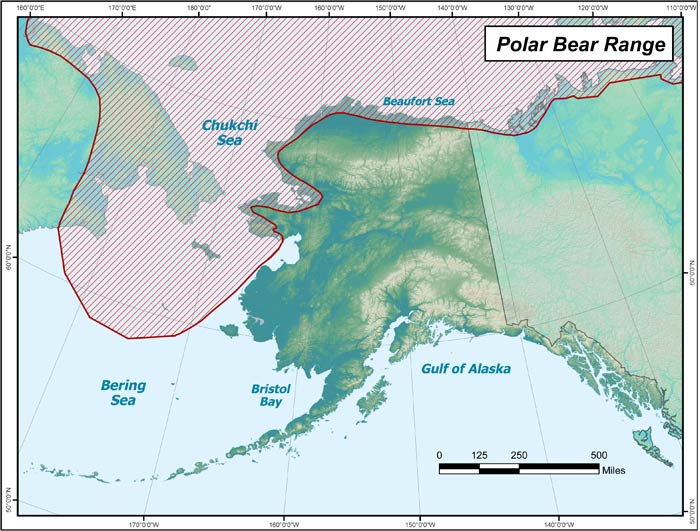
Alska polar bear habitat. State of Alaska photo.
Opposition groups filing appeals against the original designation claimed that the Fish and Wildlife Service overstepped its authority and created major economical consequences with relatively no conservation benefit whatsoever. The argument presented to the Supreme court attempted to overturn the decision by the 9th U.S. Circuit Court of Appeals which left Fish and Wildlife open to make “sweeping designations (in this case an area the size of California) that overlap with existing human development (including, even, industrial areas).” further arguing that the designated polar bear habitat interfered with oil industry operations as well as tribal sovereignty.
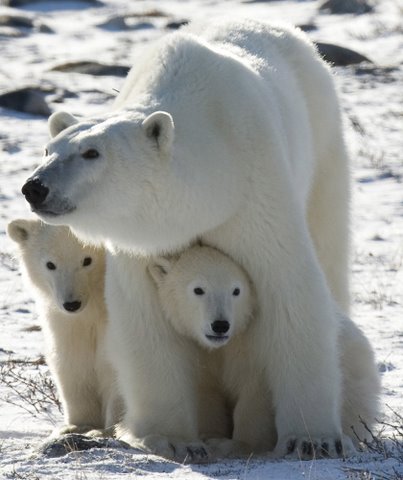
Mother polar bears avoid having their cubs swim in the ocean until they have the fat reserves to protect them. Jonathan Hayward photo.
“Swept within that enormous block of land are the entire ancestral homelands for certain Native communities, as well as the largest and most productive oil field in North America,” the petition to the oil and gas group gave the Supreme Court. Nearly 96 percent of the protected habitat area is sea ice, the smaller, remaining area includes “industrial facilities, garbage dumps, airports, communities, and homes (from which bears are actively chased away) as ‘critical’ habitat that is purportedly free from ‘human disturbance’ or otherwise ‘unobstructed,’ ” the petition said.
The coalition of various groups argued further that the 9th Circuit Court’s broad ruling would allow for expansion of habitat designations in other regions of the United States.
The government stated that it utilized two rounds of public comment and current, leading scientific data in defense of why the protected habitat was designated by courts initially.
“The Service did not designate any areas outside the geographical area currently occupied by polar bears because it determined that ‘occupied areas are sufficient for the conservation of polar bears in the United States,’ ” the federal government reported to the Supreme Court.