by Steve Selden | Jan 26, 2017 | Tour News
Another report from the kloffts adventure to Churchill with Natural Habitat Adventures this past fall. Check out their travel website at Go See It Travel for more photos and blogs about their travels!
All of us were anxious to see polar bears, but we weren’t spotting any on our first evening out. We did see the most incredible sunset on the tundra, and even though we were all a little disappointed, we couldn’t help but feel privileged and awed by the environment! We put our cameras away and enjoyed dinner set out in the rover on the dark tundra. Then just as we were getting ready to leave, someone spotted a mother bear and two very young cubs outside of the rover, walking right in front and beside the vehicle. Too dark to photograph, we could see their white fur glowing from the dim interior lights of our polar rover and just enjoyed the magical moment of seeing polar bears in the wild for the first time!
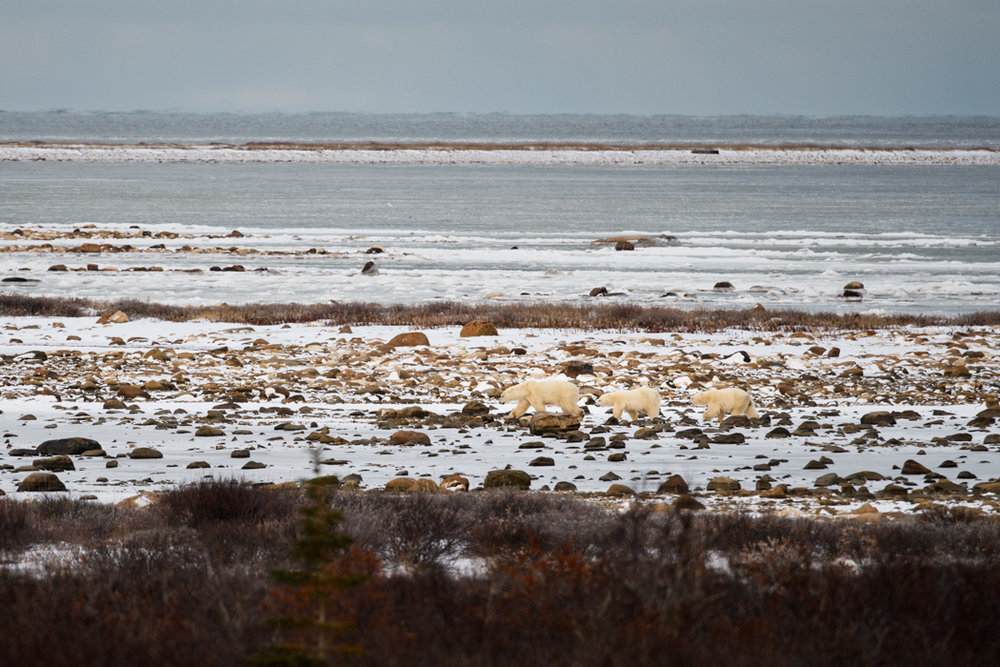
Polar bear family wanders the tundra in Churchill Wildlife Management Area. Jeff Klofft photo.
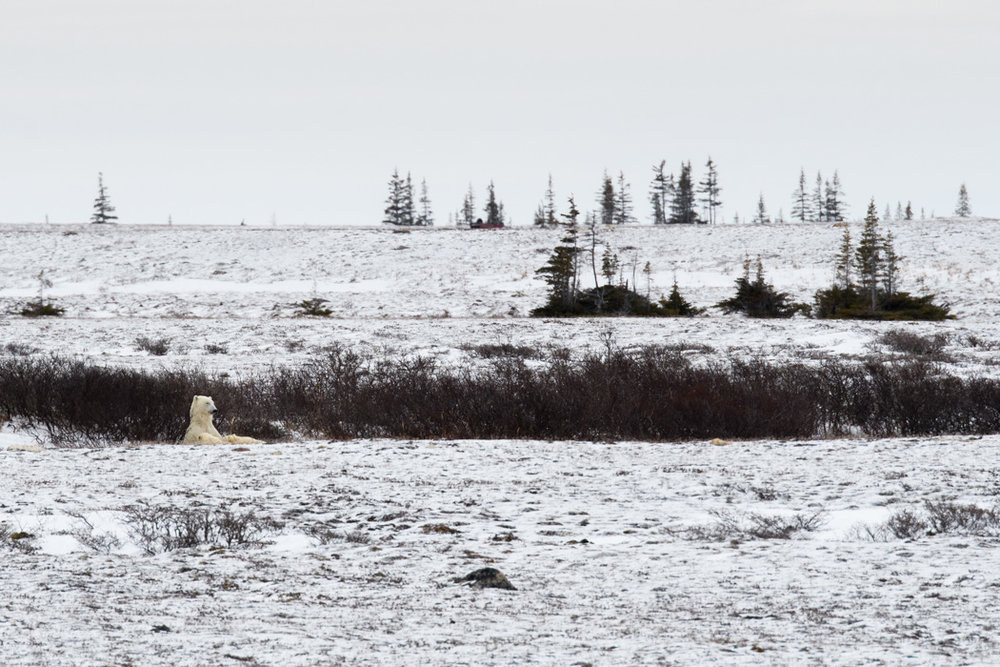
Polar bears nursing in the CWMA. Jeff Klofft photo.
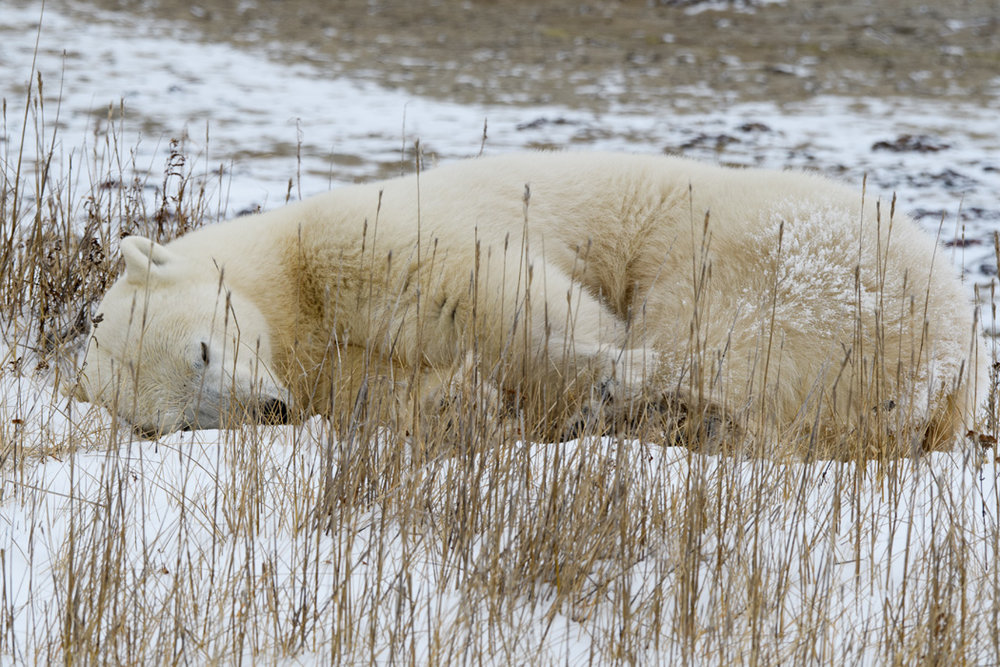
Sleeping polar bear near the Hudson Bay coast. Jeff Klofft photo.
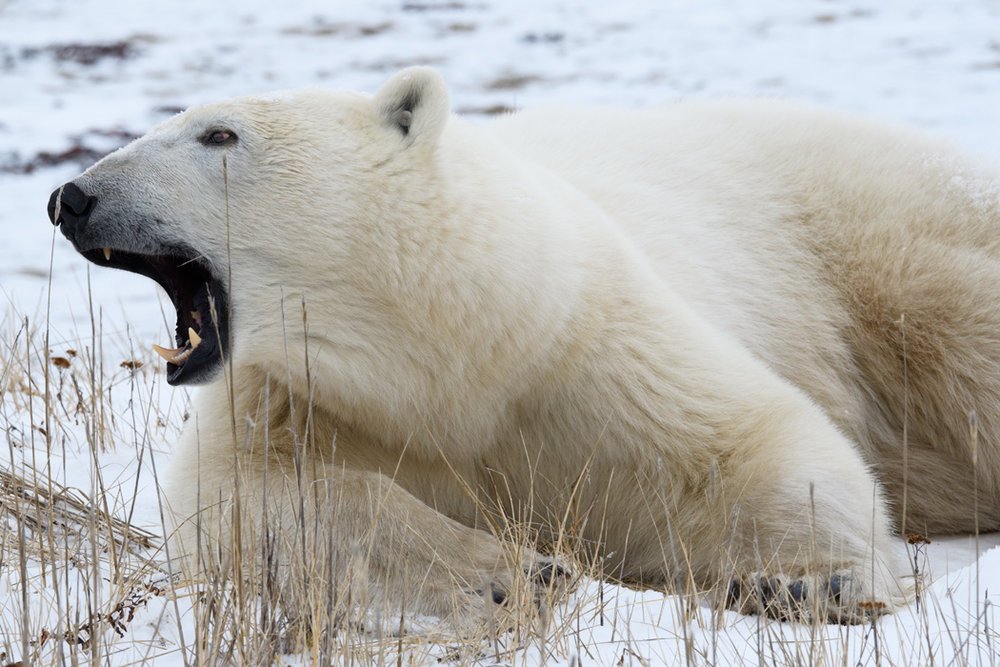
Polar bear yawning from a little stress. Jeff Klofft photo.
Reluctantly, it was time for us to start our journey back to the launch. The guides and drivers keep the schedule, even though we could have could stayed out on the tundra forever after the exciting bear sightings we had on Halloween! The trip back was not disappointing, enjoying the beautiful scenery,We enjoyed the rover ride through lakes and over rocks, and we even spotted some more wildlife!
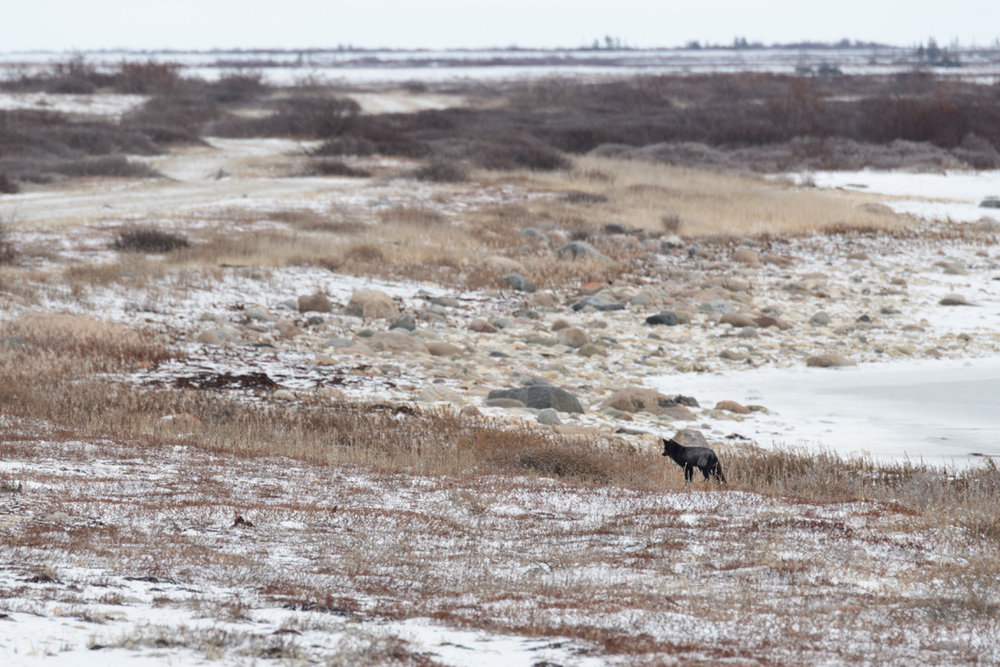
Silver fox roams the tundra in Churchill. Jeff Klofft photo.
This trip with its focus on polar bear conservation, demands that we observe but not disturb, so sometimes the bears are at a long distance, and we must watch them from where we are. Of course, the bears have no such rules, and frequently, these smart, curious animals would see the rovers and want to do a little exploring themselves. That’s what happened in this case. A mother bear and what we later discovered was two female cubs were sleeping, but once we stopped about 1/2 mile away, one of the young cubs was curious and started making her way towards our rover and the others parked near us. She looked back at her more timid sister and slumbering mother, and seemed to be urging them to come explore with her. She started out and before long, her sister followed along behind. After they got a certain distance away, mamma bear heaved herself up and plodded along behind her curious off spring.
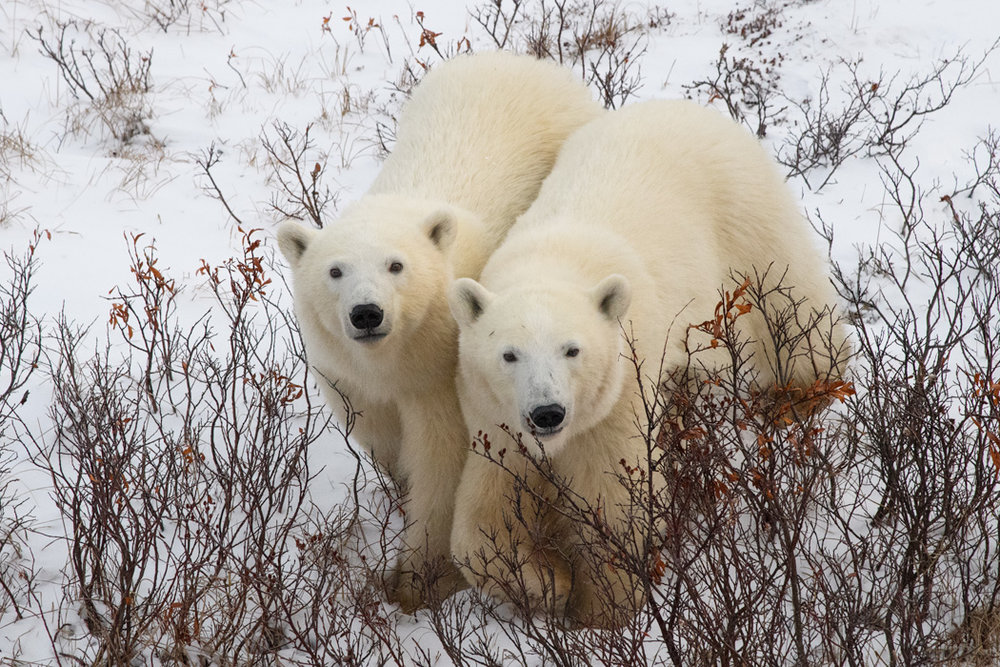
Pol;ar bear cubs approach the polar rover within a few feet. Jeff Klofft photo.
The family of bears walked the whole line of rovers prompting us to ask our driver and guide just how much they had paid the bears for the encounter! After a few minutes of curious sniffing the bears moved on providing us with incredible photo opportunities!

Polar bear cubs sniffing out the danger. Jeff Klofft photo.
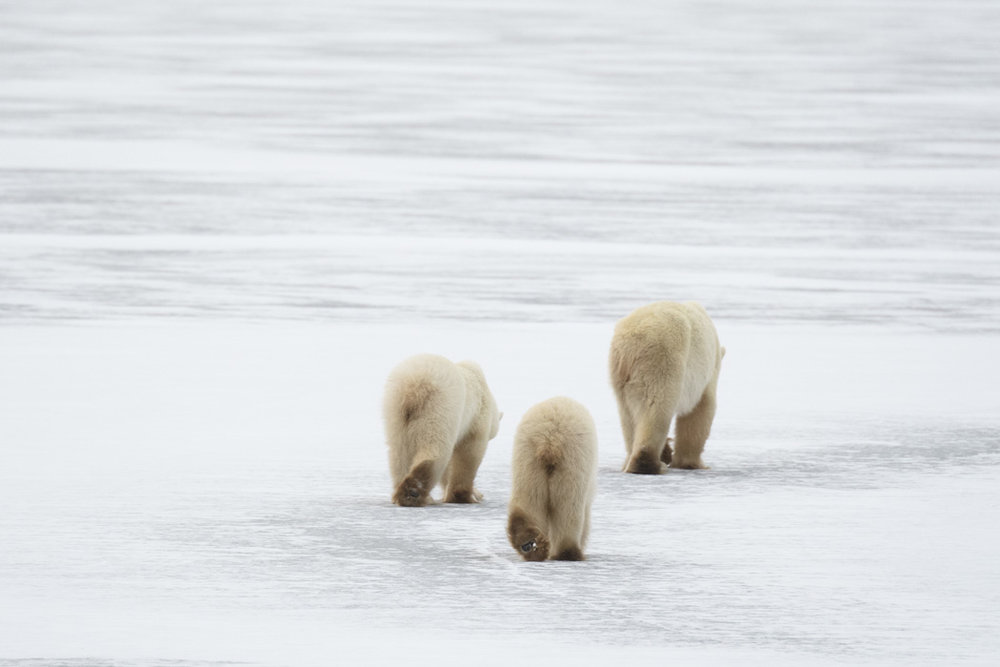
Polar bear family moving to safety away from a male bear. Jeff Klofft photo.
by Steve Selden | Jan 23, 2017 | Tour News
Before northern lights season starts we wanted to post this blog series from Kathy and Jeff Klofft from Boston. The couple joined Natural Habitat Adventures last fall on a polar bear trip to Churchill and documented the trip in a blog by Kathy and some awesome photos from Jeff. Their blog site is Go See It Travel documenting their adventures around the USA and world. These next few days we will publish their account of Churchill as well as lots of photos from the experience! Enjoy.
Polar Bears of Churchill, Manitoba, Canada
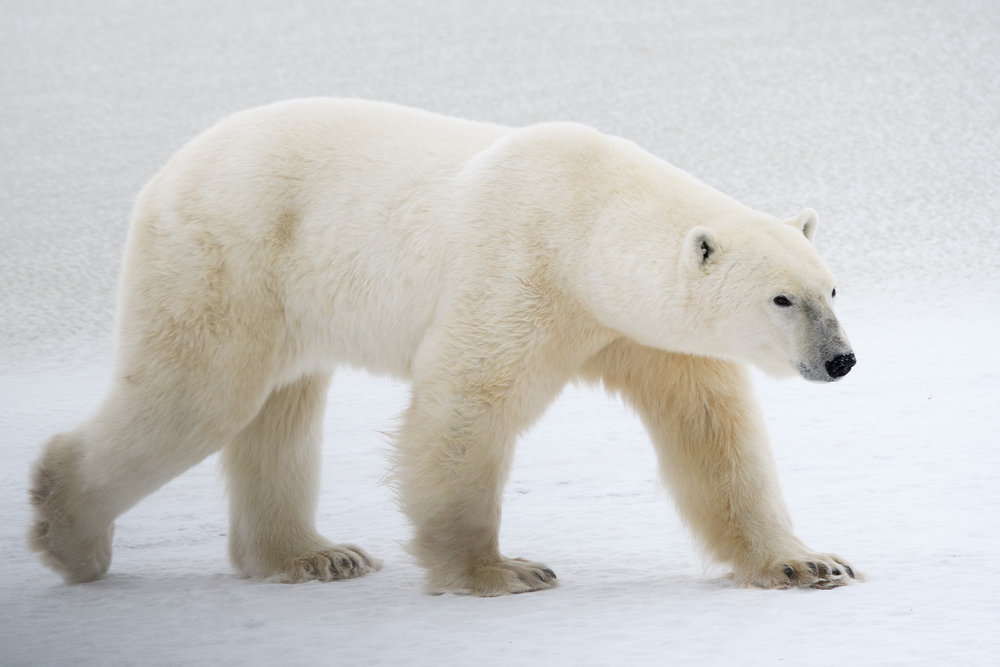
Polar bear on the Churchill tundra. Jeff Klofft photo.
There are only a few places in the world to see polar bears in the wild. This opportunity is further restricted by the fact that generally solitary polar bears have a huge territory range for most of the year and most live year round out on polar ice that is virtually inaccessible to human beings. The bears eat primarily seals, hauling them out of their breathing holes in the ice with their enormous paws. Some of the bears living furthest south, such as the population near Churchill have to move to land for a few months when the ice melts each summer. One place where polar bears can be seen is in Churchill Manitoba in the Wapusk National Park in Manitoba, Canada. The park area was created on the shores of Hudson Bay, where polar bears wait for the ice in Hudson Bay to freeze each fall. The bears don’t eat during the summer, spreading out in Northern Canada or denning up to give birth to cubs, and are just waiting for the ice to form again, so they can go back out hunting.
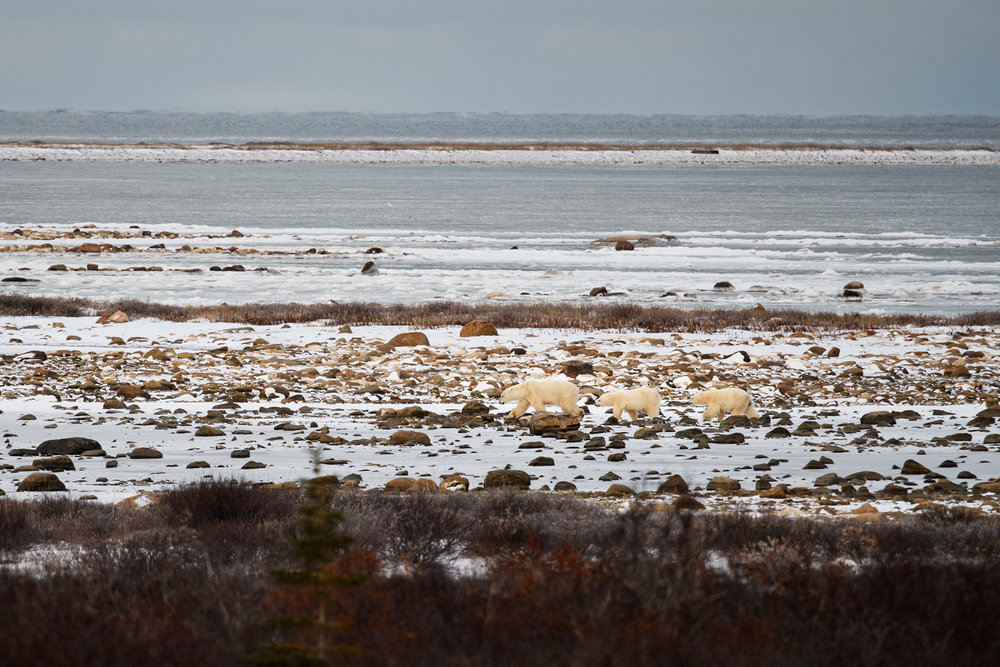
A mother and her cubs wait for the ice to freeze on Hudson Bay to begin hunting seals. Jeff Kloft photo.
With a helicopter (like the researchers use) or lots of time living in bear country, a human might have an encounter with a bear during the 8 months, or so of the year that the bears are on ice, but most chances for bear and human encounters in Churchill will be in the late fall, mid October to mid November, when the bears start to literally lie on the shores waiting for the ice to from. Watching the bears on the shore waiting reminded me of this adaptation of a phrase about boiling water…”a watched bay never freezes!” But their month long wait on the shores of the Hudson Bay also provides a chance for human/bear encounters.
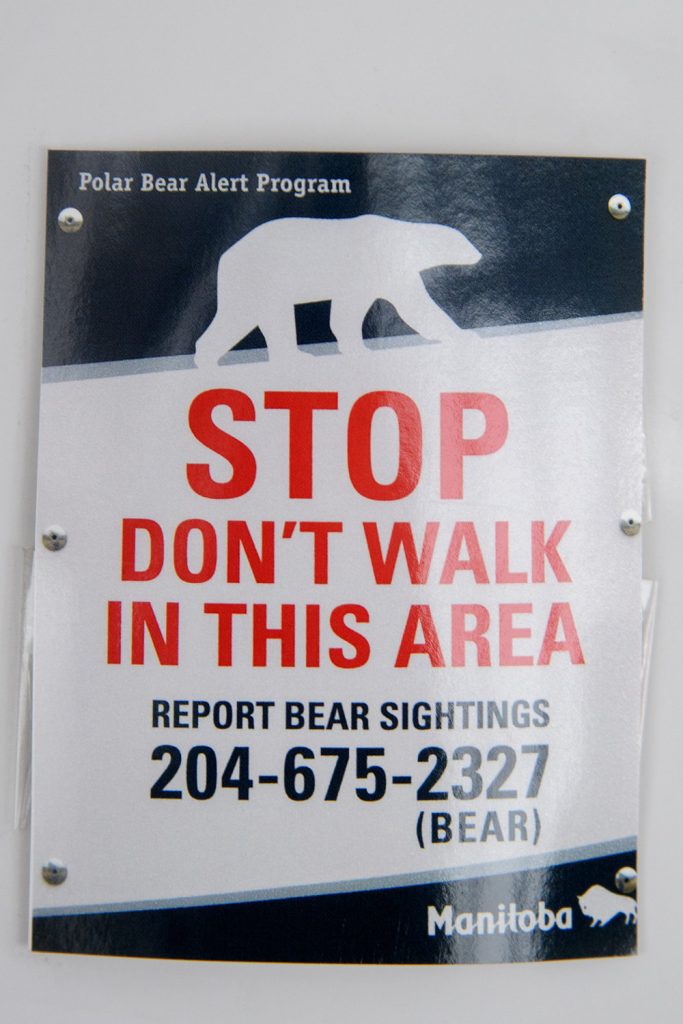
Polar bear warning sign in Churchill. Jeff Klofft photo.
For most of human history, polar bear/human encounters consisted of bears being hunted by Inuit people who used every part of the bear for survival, or dangerous encounters where bears sought human food or sled dogs and had to be destroyed to protect people and property. We learned from our guides that governments who operate in polar bear range states joined together to make agreements which would allow traditional hunting for people who rely on polar bears for survival, but protect them commercial hunting, which was decimating the numbers of polar bears in the wild. Since then, efforts were made to ensure bear/human conflicts could be avoided. Polar bear tourism was developed to happen only in the safest ways for both humans and bears. During our trip we heard from Elizabeth Kruger, World Wildlife Federation Arctic and Bering Sea Program Officer, that local residents have been empowered and trained to use bear patrols to redirect bears from populated areas, and local activists have changed garbage handling methods to discourage them from seeking human food. Our polar rover driver described that growing up in Churchill, the family would go out to the dump to see bears. Today, creative handling and containment of garbage have eliminated the bears at the dump and they roam where they belong, in the tundra. In Canada concessions were given to allow operators to allow polar bear tourism in the safest possible way.
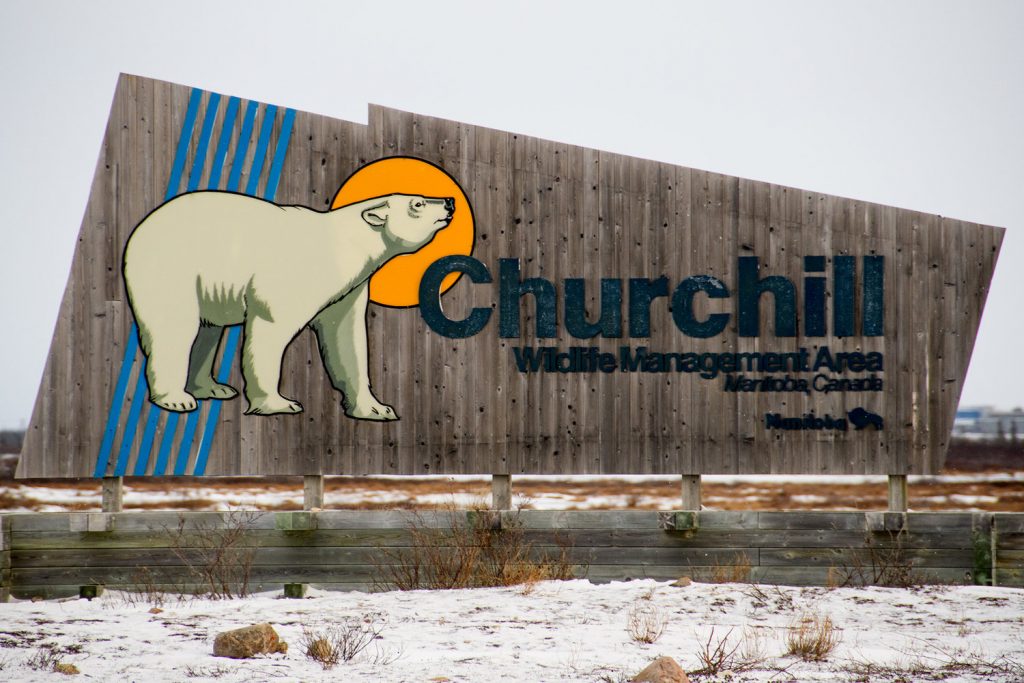
Welcome to Churchill sign on the outskirts of town. Jeff Klofft photo.
So…bears are being conserved, but there are only a few weeks a year in Churchill when it’s practical to see polar bears, and the location to find them is still very remote…so how do you “go see it”?!
Tomorrow we will post more of the blog and answer the question above.
by Steve Selden | Jan 22, 2017 | Churchill Photography
Wishing everyone a fantastic end to the weekend. Stayed posted for exclusive coverage of the 2017 northern lights season starting this week. There won’t be any polar bears around but the amazing sights in the sky will be magical as usual!
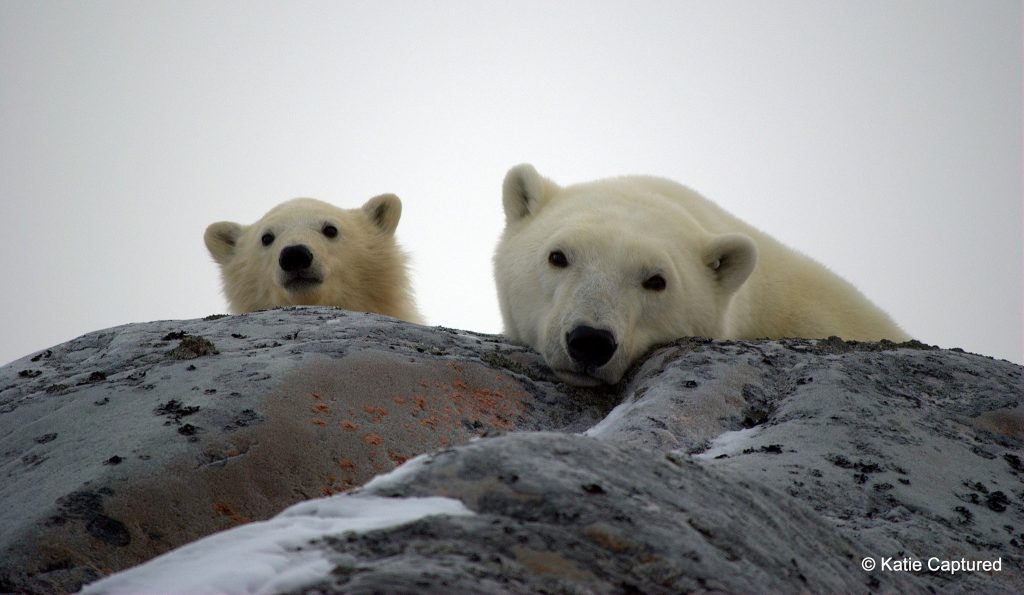
Polar bear mother and cub taking a breather lying on the Precambrian shield in Churchill Katie de Meulles photo.
by Steve Selden | Jan 17, 2017 | Churchill Photography

Polar bears sparring on the pack ice. Paul Nicklen/National Geographic photo.
This photo by Paul Nicklen for National Geographic gives us a rare look into life out on the pack ice for polar bears. Sparring polar bears is a common behavior in the Churchill Wildlife Management Area although it’s rare to see these majestic animals going at it out on the ice of the Hudson Bay. The western Hudson Bay polar bear population is enjoying the seal – hunting season finally and we will see them in the spring. Enjoy!
by Steve Selden | Dec 21, 2016 | Churchill News
Outgoing President Barack Obama executed a critical order on Tuesday by banning any new gas and oil drilling in federal waters in Arctic and Atlantic Oceans. The move comes as an environmental safeguard prior to the new Republican administration taking office January 20th lead by President elect Donald Trump.
Utilizing a 1950s-era law termed the Outer Continental Shelf Act, Obama used the power of President to limit areas from mineral leasing and drilling. Trump’s incoming administration will only be able to challenge and change the edict by fighting it in court according to several environmental groups agreeing with the order.

Map of the Arctic waters to the north of Alaska just protected by President Obama. BOEM image.
The Alaskan waters ban affects 115 million acres in the Chukchi Sea and most of the Beaufort Sea as well as 3.8 million acres in the Atlantic Ocean. A main concern of environmental advocates regarding fuel exploration in the region is the devastating affects an oil spill or gas leakage in the oceans would have on the ecosystems. Such a remote and harsh climate would severely limit the capabilities of clean-up crews and emergency response teams. Wildlife such as polar bears, whales, seals and fish would be harmed and populations of the animals could be irreversibly destroyed.
Trump has continually stated that he will seek to expand offshore oil and gas drilling in the waters north of Alaska. Recent releases from his energy transition team predicted increases in production in the Chukchi and Beaufort Seas. These forecasts have been dealt a serious blow and are likely “dead in the water” at this time. Trump spokespeople would not comment on the actions.
Very limited oil and gas exploration has been happening in recent years as less expensive shale oil production primarily out of Texas and North Dakota has been the priority. Drilling off Arctic shores in Alaska is more expensive and risky in nature. Most notably, Shell Oil pulled out of the waters just last year following a shipping accident and limitation laws discovered by environmental groups limiting exploration.
Proponents for drilling such as the American Petroleum Institute, an oil industry group, stated that Trump would be able to use a presidential memorandum to lift the ban rendering the move by Obama obsolete. “We are hopeful the incoming administration will reverse this decision as the nation continues to need a robust strategy for developing offshore and onshore energy,” said Erik Milito, API’s upstream director.

A view over the now protected Arctic waters from Barrow, Alaska. NASA photo.
Obama and Canadian Prime Minister Justin Trudeau are in agreement with protecting Arctic waters. The two leaders are initiating joint actions and these actions “reflect the scientific assessment that, even with the high safety standards that both our countries have put in place, the risks of an oil spill in this region are significant and our ability to clean up from a spill in the region’s harsh conditions is limited.” stated Obama.
In similar action Trudeau and Canada will designate all Arctic Canadian waters off limits indefinitely to any future offshore Arctic gas and oil licensing. These sanctions will be reviewed every five years through a climate and marine science-based life-cycle assessment. Obama’s action, unlike the five year review applied to the Canadian law, contains no designated analysis period outlined for the U.S. law.
Under current law, authorization is not granted for reversing a previous presidential order of this kind so efforts by Trump to challenge this move will most likely need to be taken up in court via a lawsuit.
“No president has ever tried to undo a permanent withdrawal of an ocean area from leasing eligibility,” said Neil Lawrence, Alaska director and attorney at the Natural Resources Defense Council.