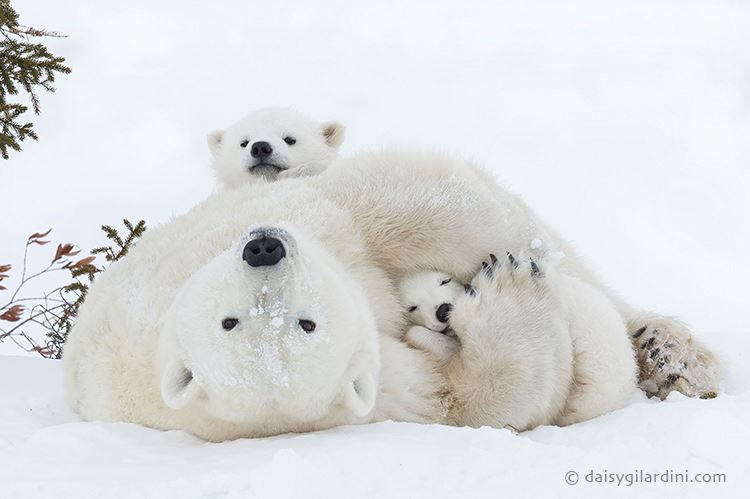
Sometimes hump day can be tough. Relax and take it easy like this polar bear family in Wapusk National Park just east of Churchill, Manitoba. This photo was taken by Daisy Gilardini in the polar bear denning area of Wapusk. Polar bears congregate in Churchill throughout late summer into the fall while waiting for the Hudson Bay to freeze. The denning area of Wapusk National Park is home to mothers and cubs during the deep freeze of winter. Only a few brave souls venture into this region. Churchill is the polar bear capital of the world and the best place to see these unique and majestic animals.
Polar bear sow and cubs in Wapusk National Park. Daisy Gilardini photo.
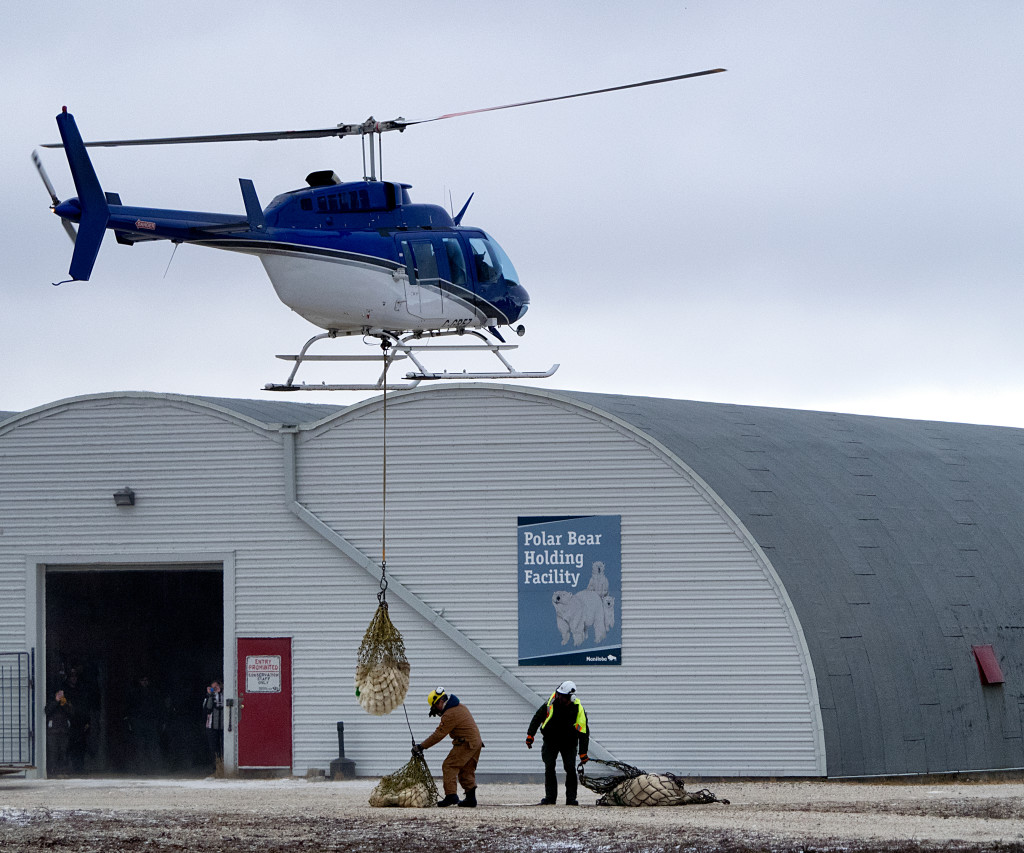
An assessment of Manitoba government statistical documents point to increased polar bear encounters with people in Churchill, the self proclaimed polar bear capital on the shores of Hudson Bay. As a result of increased interaction between polar bears and humans the numbers of incarcerated bears has nearly doubled since 2013. That year 36 animals were captured and taken to the polar bear holding facility, or jail, compared with 65 this past year.
Polar bear lift in Churchill. Justin Gibson photo.
Over the past three years the numbers of documented cases of polar bear encounters in Churchill has risen from 229 in 2013 to 351 last year. All aspects of the current numbers point to increased activity between bears and humans in Churchill.
Daryll Hedman is the regional wildlife manager for Manitoba Conservation. His view on last year’s record for the number of polar bears caught in the populated “control zone” of Churchill indicates that even the authorities that deal with these animals on a regular basis are somewhat alarmed by the data. “Three hundred and fifty-one — for occurrences, that’s a high number,” he said.
Hedman and other experts are pointing to climate change as the culprit and resulting decreased sea ice as largely to blame. Over two-thirds of the planet’s polar bears live in Canada though experts are claiming that within only a few decades we could have a massive decline in numbers. With later freeze up in Arctic waters and thawing coming earlier in the spring, polar bears are competing for fatty seal meat within a tighter window. This impacts cubs trying to survive their first year the most. According to Andrew Derocher, a leading polar bear authority from University of Alberta, fewer cubs are making it through their first year out of the den. They simply are not getting the extended seal – hunting training on sea ice that they once were.
Polar bears spending more time on land are more likely to migrate to inhabited areas like Churchill in search of food. These encounters are happening more often and earlier in summer. Not that long ago polar bears rarely appeared in Churchill before August. Now early July seems to be the norm.
“What’s the tipping point?” Headman said. “What’s the threshold that they can go without food? When they’re on land, they’re not eating.”How long can they sustain themselves without getting onto that sea ice platform to hunt seals again?”
International Polar Bear Day is February 27th and Polar Bears International (PBI) is once again bringing to light various ways we can all contribute to protecting this iconic species as well as fight against global warming trends affecting polar bears in their Arctic habitat. One initiative you can take is signing PBI’s petition asking Congress and the White House to set fair prices for carbon and thus accelerating the transition to utilize renewable energy sources.
Each year in October and November, travelers make the journey to Churchill, Manitoba with Natural Habitat Adventures to see the world’s greatest concentration of polar bears, which congregate as they wait for the sea ice to freeze on Hudson Bay. Nat Hab partners with World Wildlife fund (WWF) to educate people about polar bears and climate change through a unique partnership—Nat Hab’s Polar Bear Expedition Leaders, who have been guiding bear tours for an average of more than 10 years each, receive training and resources from WWF’s top scientists, ensuring the best interpretive experience available.
Here are some of the top polar bear photos from this past season in Churchill to inspire everyone to contribute to the ongoing fight for their survival!
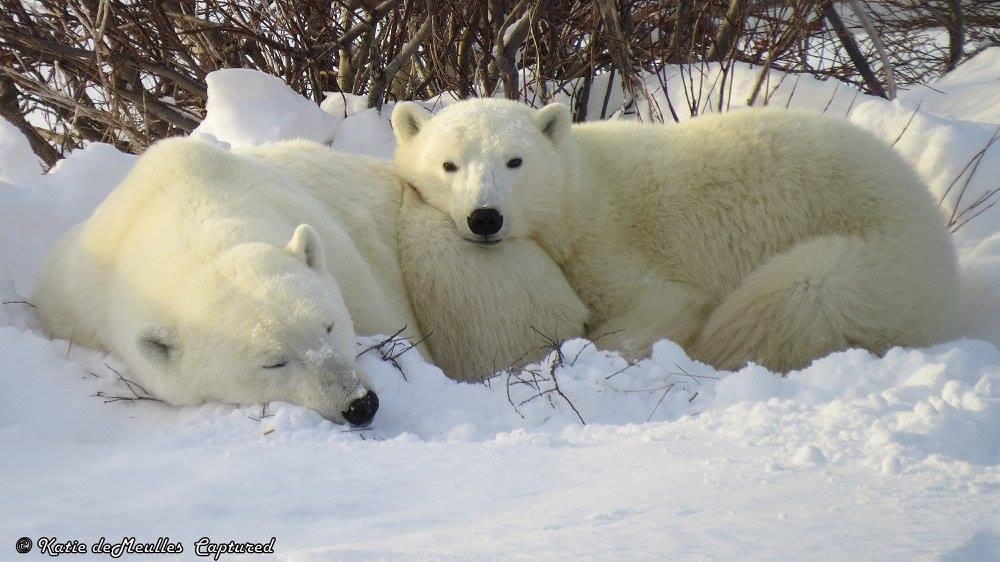
Polar bears in the snow in the Churchill Wildlife Management Area. Photo by Katie de Meulles.
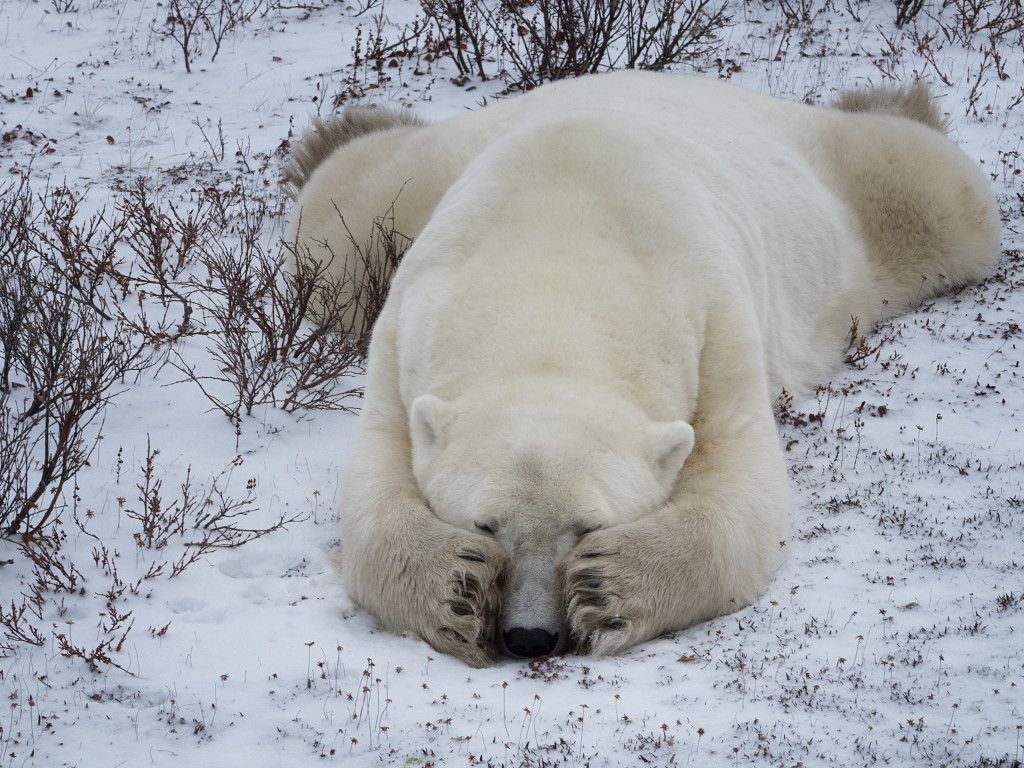
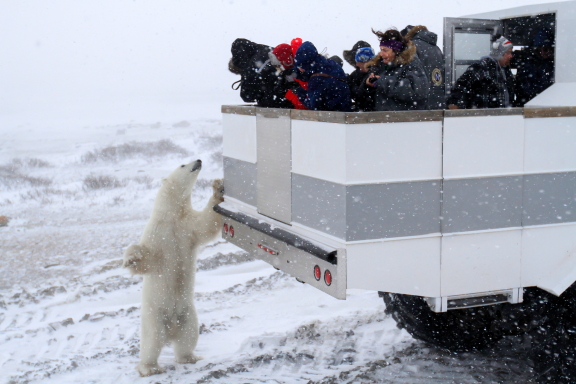
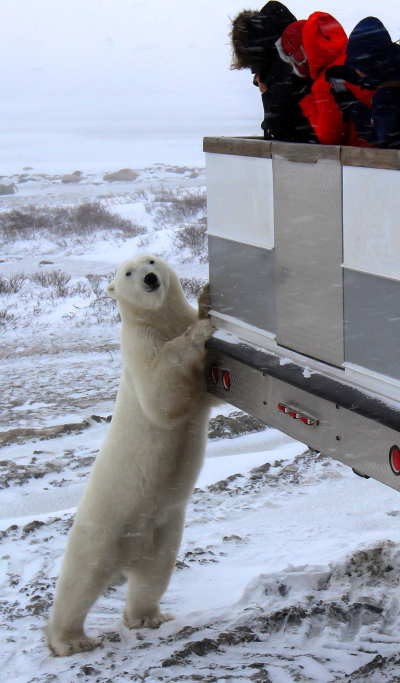
Polar bear playing peek-a-boo with a Polar Rover. Photo by Nat Hab guide Justin Gibson.
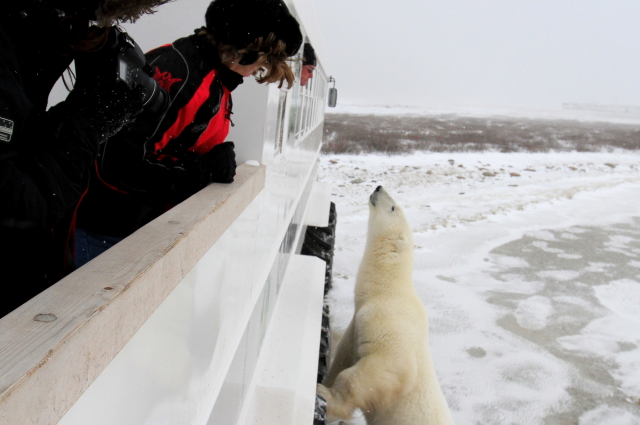
A curious bear says hello to guests. Photo by Nat Hab guide Brad Josephs.
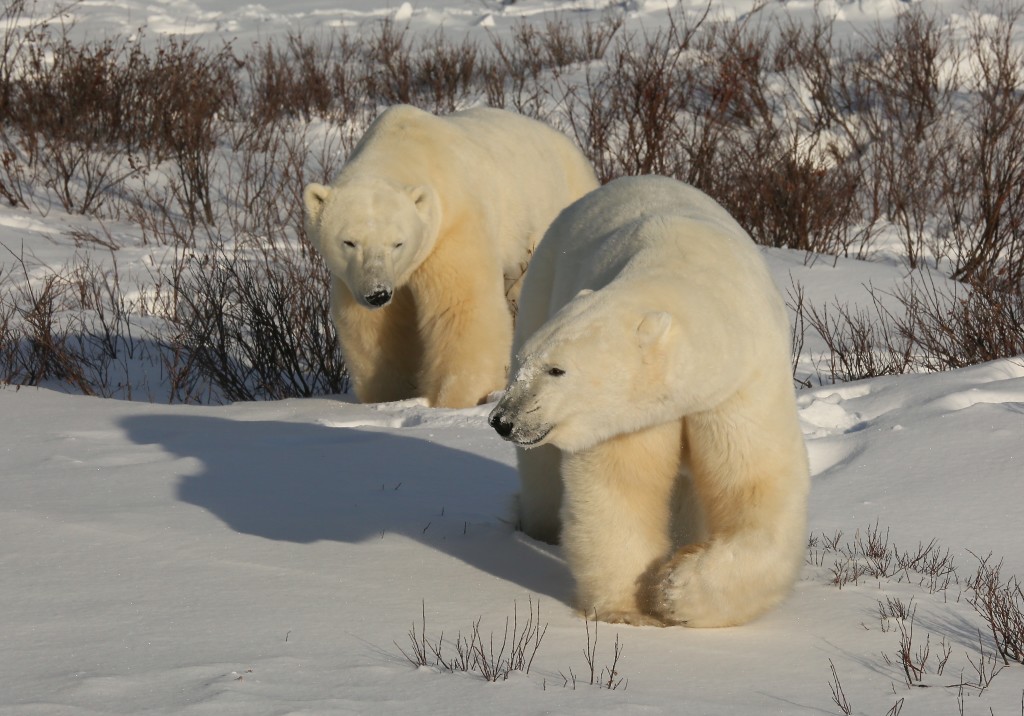
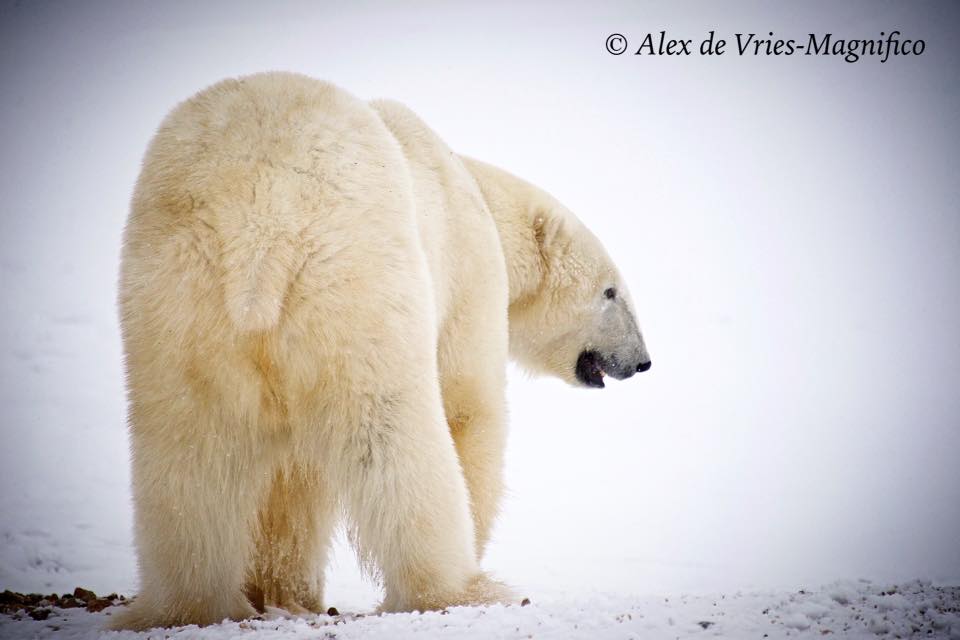
Polar bears in the sun. Photo by Natural Habitat Adventures.
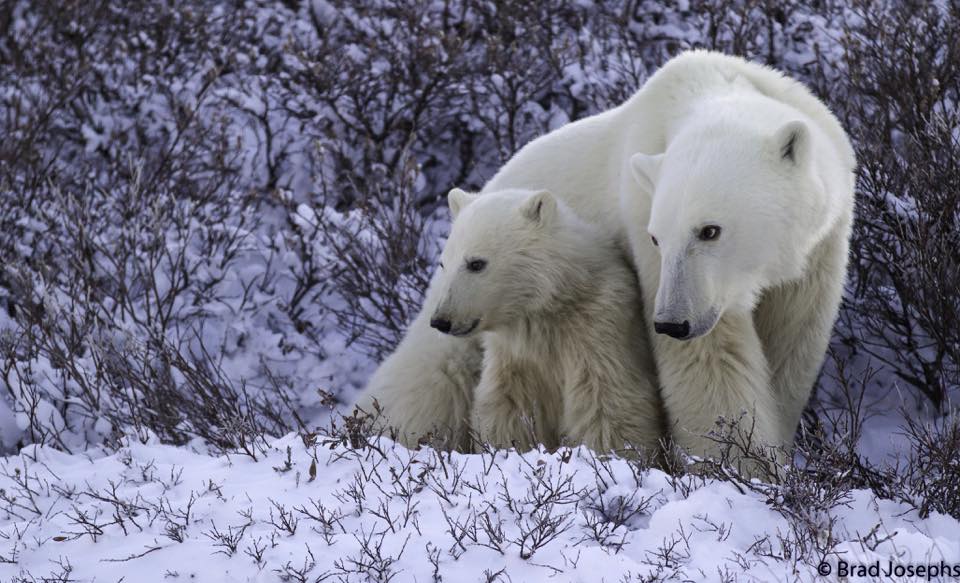
Polar bear sow and cub in the willows in the Churchill Wildlife Management Area. Photo by Nat Hab guide Brad Josephs.
In case you missed Sunday’s piece about Churchill and the polar bears on CBS Sunday Morning, here it is. The footage of the region is spectacular! Enjoy
Churchill in summertime is a magical sub – Arctic paradise! Three short or long months, depending on how you look at it, pack in a vast and diverse pallet of nature. The tundra and Hudson Bay come alive as tributary rivers ignite with life and small boats of eager travelers seeking the vibe of the beluga whale pods. The “Arctic Riviera” is shelter for belugas to nurture young, molt their old skin or just enjoy the “warm” waters of the southern Hudson Bay.
Beluga whale underwater in th Churchill River. Alex De Vries -Magnifico photo.
As a guide returning to Churchill each year, I was drawn naturally like a migrating animal and the annual sojourn just became instinctual. Each spring I would start to feel the pull of belugas out on the Churchill River and Hudson Bay. After trolling among the pods, kayaking and snorkeling on a daily basis for over 10 years, the feeling takes root in one’s psyche. The draw to migrate for whatever reason is real. The belugas are the main attraction here for sure!
Although belugas, birds and sometimes polar bears are the main draw for the summer season, there are some lesser known features or entities in and around Churchill that have been hidden jewels over the years. Here are some that I really was drawn to.
-Boreal Chorus Frog – One of the jewels of the north and so much fun to search for around the edges of an Arctic pond.2.- Jellyfish– There are a number of jellyfish that thrive in the cold water of the north. On clear water days the sight of them suspended around beluga whales is ethereal.
Aurelia, a jellyfish found in the Churchill River. G. Young, Photo copyright.
3. Sandhill Cranes – Over the years these birds are usually spotted along the railroad tracks where grain drops from rail cars.
Two Sandhill cranes mixed in with Canada geese in Churchill. Rhonda Reid photo.
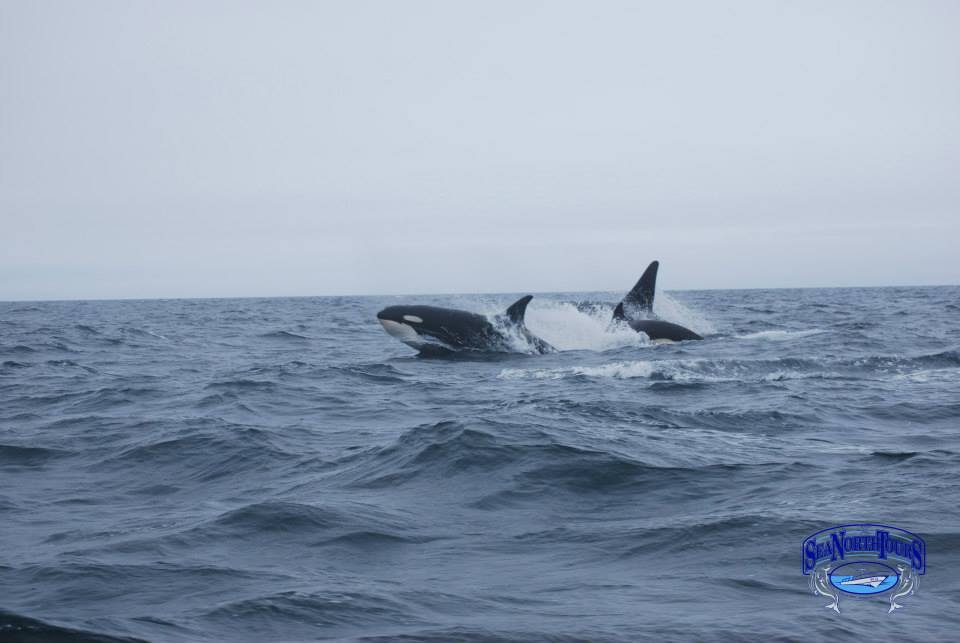
4.- Orca whales – A rare sight indeed in the Churchill area. Though, over the last few years they have been seen more often.
Orca’s in the Hudson Bay. Dwight Allen photo.
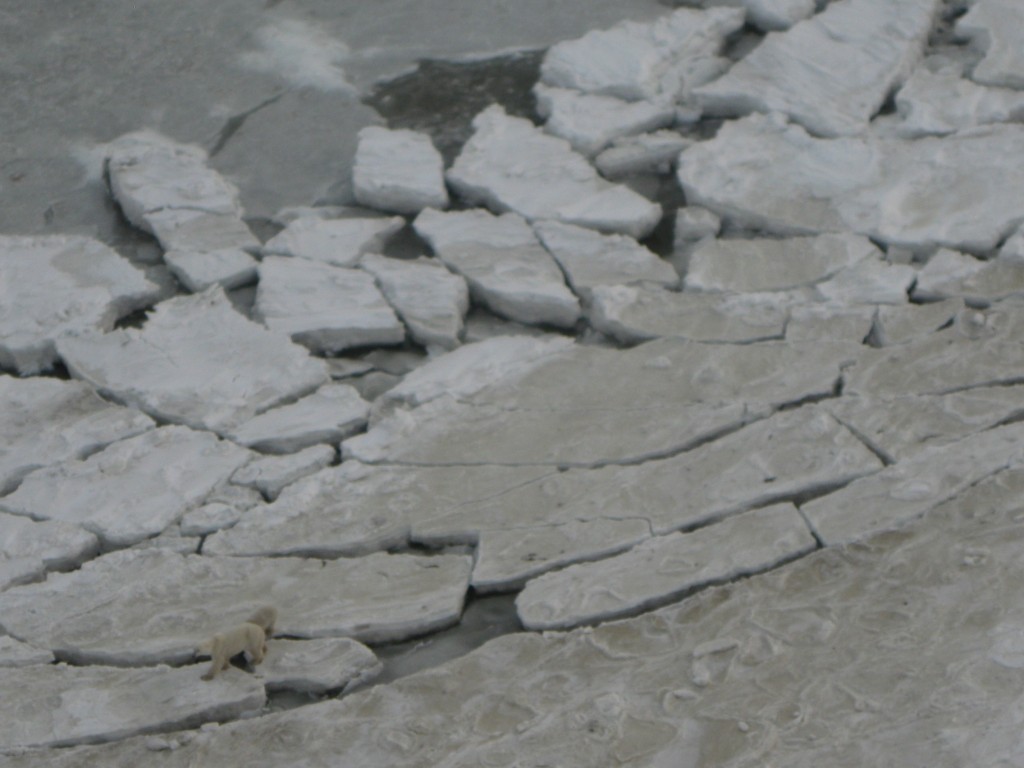
5. – Pack Ice on the Hudson Bay– If you visit Churchill early enough in the Spring there’s a good chance there will still be some pack-ice in the bay and even in the Churchill River. The ice draws wildlife to it such as bears, whales and birds.
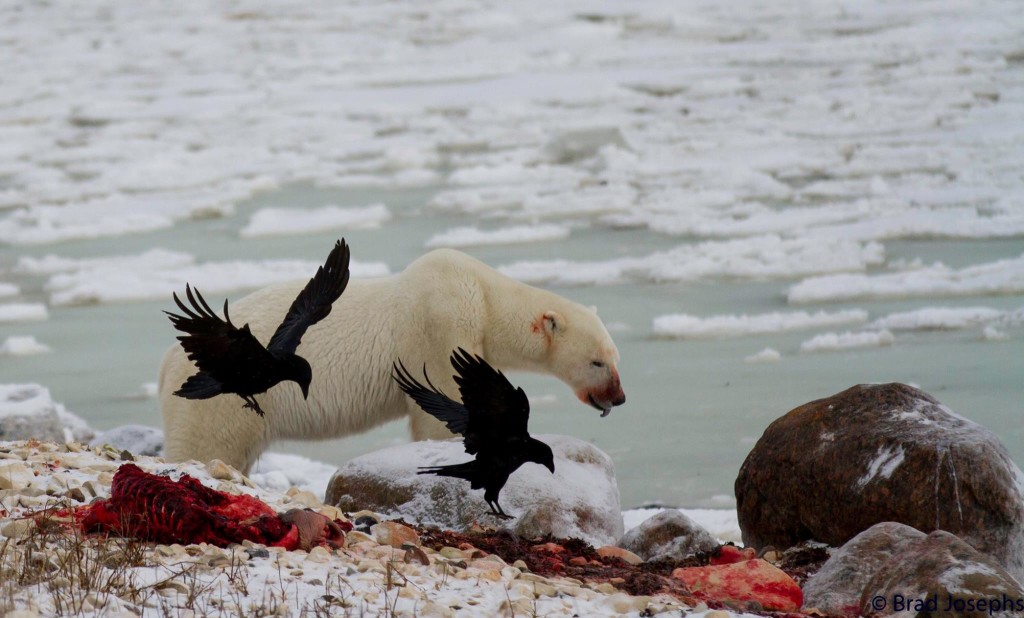
6.- Polar Bear Seal kill – The shorter ice season has produced more seal kills in both summer and fall. These kills will often draw up to 10 polar bears to the scene. This is a kill from later in the polar bear season.
Polar bear and ravens scavenge a seal kill carcass in Churchill Wildlife Management Area. Brad Josephs photo.
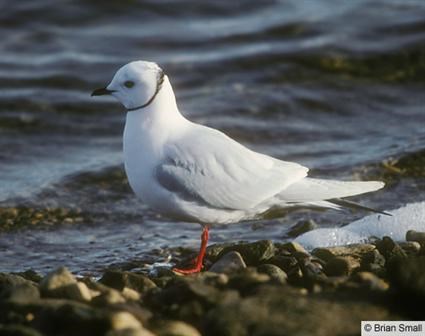
7. – Ross’s Gull – A true incredible check on the life-list if this beautiful bird unveils itself along the Churchill River. Another fun treasure hunt!
Ross’ gull along the gravelly shore. Brian Small photo.
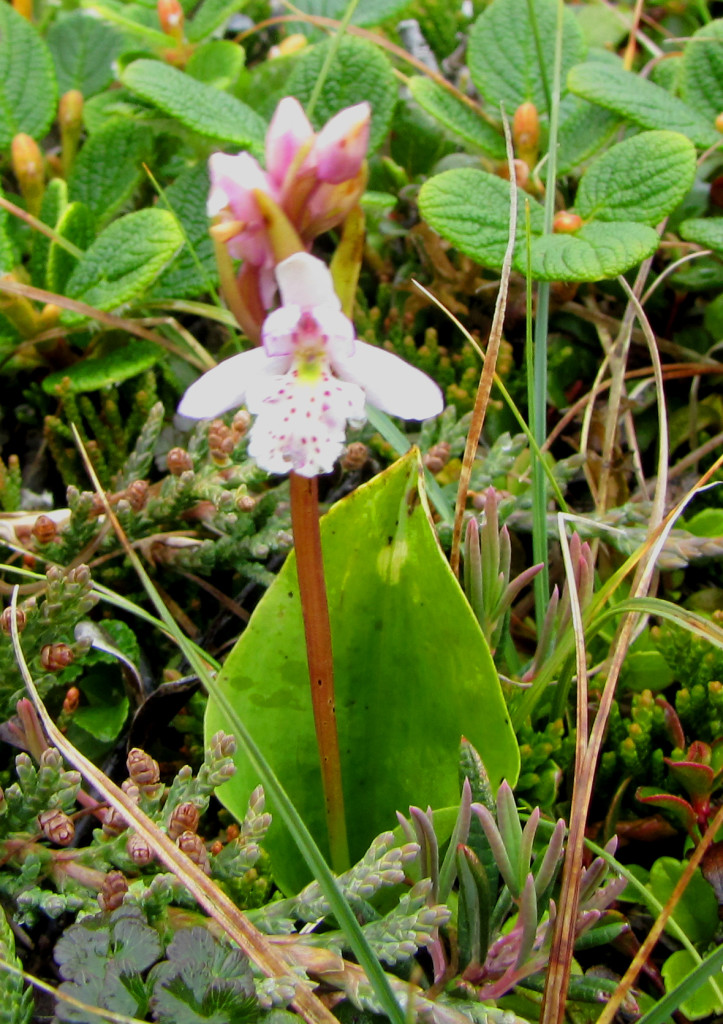
8. Orchids – One wouldn’t think these delicate plants could survive the harsh Arctic weather though these flowers are opportunistic and make the most of their northern environment.
Round – leaved orchid in Churchill. Steve Selden photo.


 2.- Jellyfish– There are a number of jellyfish that thrive in the cold water of the north. On clear water days the sight of them suspended around beluga whales is ethereal.


 6.- Polar Bear Seal kill – The shorter ice season has produced more seal kills in both summer and fall. These kills will often draw up to 10 polar bears to the scene. This is a kill from later in the polar bear season.