Natural Habitat guide Justin Gibson just finished a short though successful stint guiding northern lights groups in Churchill. He reported an eight out of eight night success rate for viewing the aurora borealis. These stellar photos are a testament to the fantastic trips the past couple of weeks and overall this season.
Northern lights above Churchill River Mushing tent. Brad Josephs photo.
Photographing the tundra landscape. Natural Habitat Adventures photo.
Northern lights and the boreal forest. Alex de Vries – Magnifico photo.
Sun and the Arctic landscape. Natural Habitat Adventures photo.
Tundra lodge with the northern lights above. Natural Habitat Adventures photo.
In the Arctic or sub-Arctic there are some birds that become aggressive when threatened near their nesting grounds. The majority of these species are seasonal residents of the bountiful feeding areas around the coastal lowlands. Churchill’s bountiful feeding grounds attract over 200 bird species during the spring and Summer. The Arctic tern is the king of the Arctic air…and for that matter all the air between the migration path pole to pole.
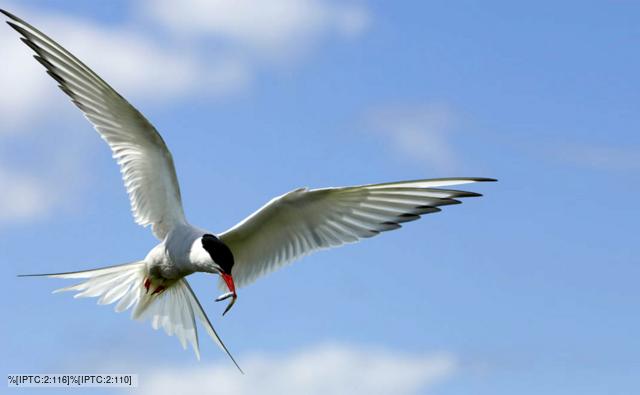
Arctic tern hovering above the nesting grounds. Rhonda Reid photo.
Arctic terns are notorious for pursuing capelin or other small fish stirred up by pods of beluga whales in the Churchill River or Hudson Bay. Their darting, aggressive behavior evokes the urgency of their mission to gain sustenance in the short summer feeding window. After a trip from nearly pole to pole of 35,000 km these birds really don’t have a pause phase. With lifetime accumulation of close to three million kilometers of flight, the life of an arctic tern is surely one of the highest paced of all living organisms. The majority of their lives is spent in the air.
Arctic terns also vehemently protect their nesting grounds which are usually along beaches in the strewn rocks and sand and nestled in the sea grass or tundra. I have personally witnessed near-attacks as well as direct hits on myself and Natural Habitat travelers who wandered too close to the nests. One such strike was to the forehead of a guest posing for a photograph taking the hit from a arrow-like beak right in the forehead. A small stream of blood symbolized the intent of these strong-willed birds. Although at the time the wound caused jaws to drop, the end result was constant laughs throughout the trip within the group. No stitches required!
Arctic tern with capelin in beak. Warwick Sloss photo.
If you have been to Churchill you probably have heard of Button Bay. If you have been to Churchill in the Summer you might have even ventured by boat to the bay itself.
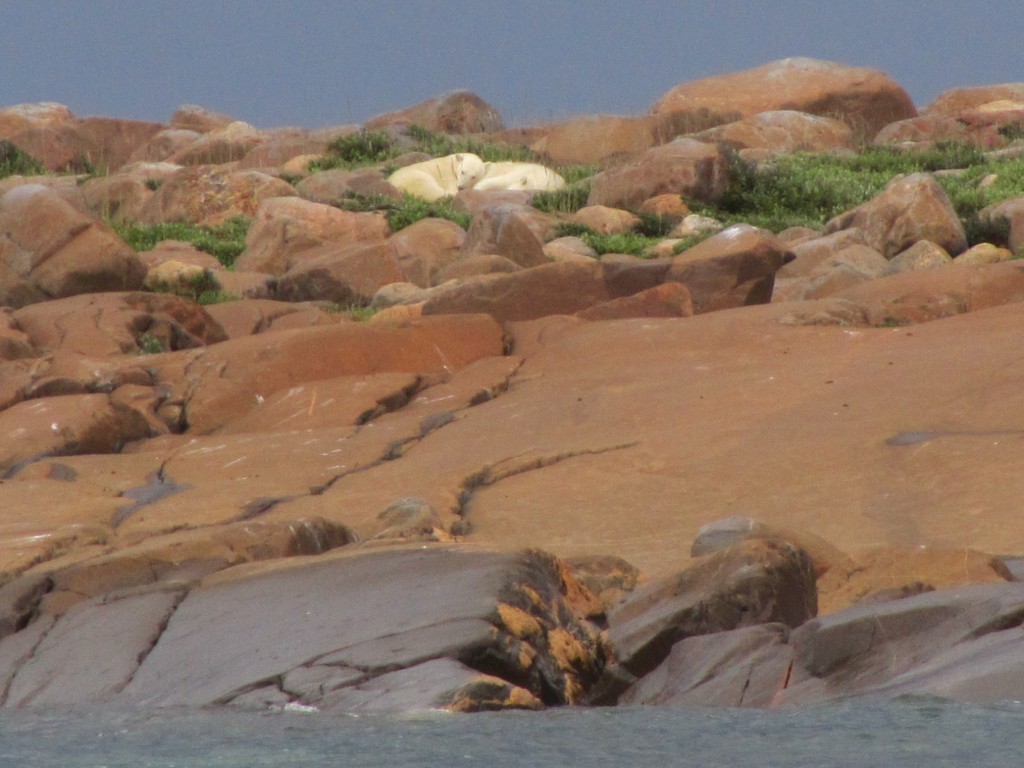
Sow and cub in the rocks off Eskimo Point. Stefanie Fernandez photo.
Button Bay lies northwest of Churchill just a short spin by zodiac around the tip of Eskimo Point and Fort Prince of Wales. From the fort you can gaze across the thickets of willows and wildflowers to the often glassy surface of the secluded inlet. It’s also possible to look across the Churchill River past Fort Prince of Wales on the point and see the glimmering surface of the bay.
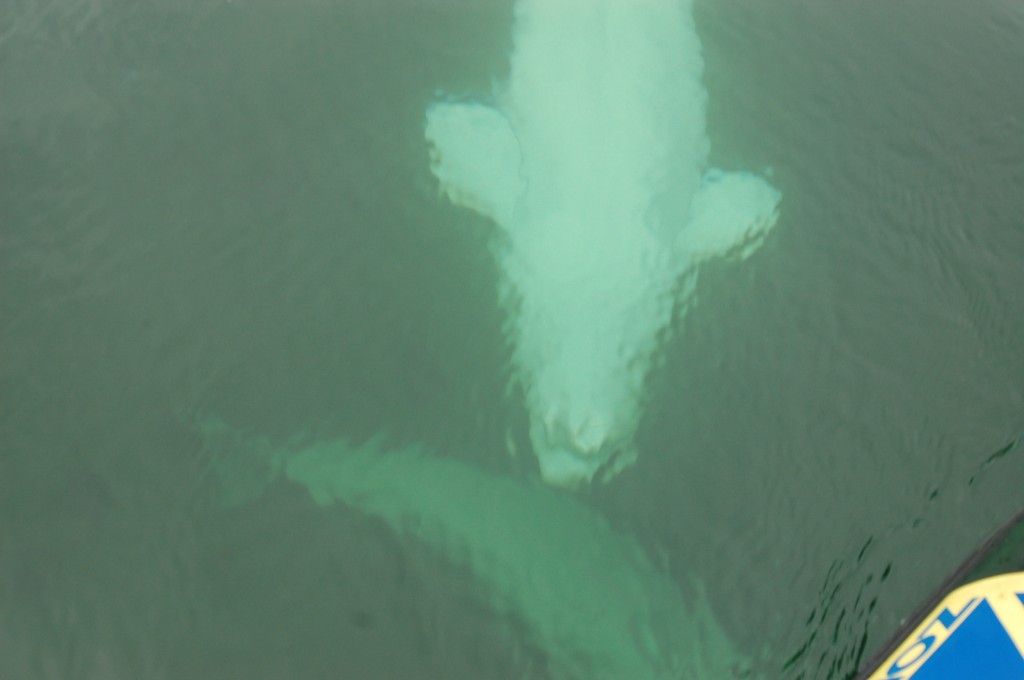
In Button Bay the water is crystal clear and belugas are quite visible under water. Steve Selden photo.
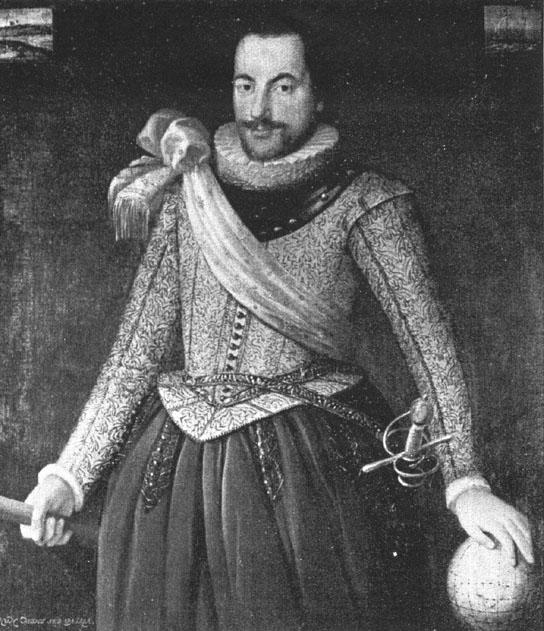
The bay was commemorated by Sir Thomas Button in 1612 when he and the crew of the Resolution ventured to “New Wales”, as he named it for England. He is credited with securing the lands along the west coast of the Hudson Bay for England. The Nelson River estuary and Port Nelson within those lands, were named after the Master of the Resolution who perished on the journey and is buried there.
Sir Thomas Button.
On May 15, 1912, 300 years later, when Manitoba’s boundaries were extended, Port Nelson was included in the new territory designated to the province. Thomas Button is therefore known to be the first white man to visit this area in Manitoba.
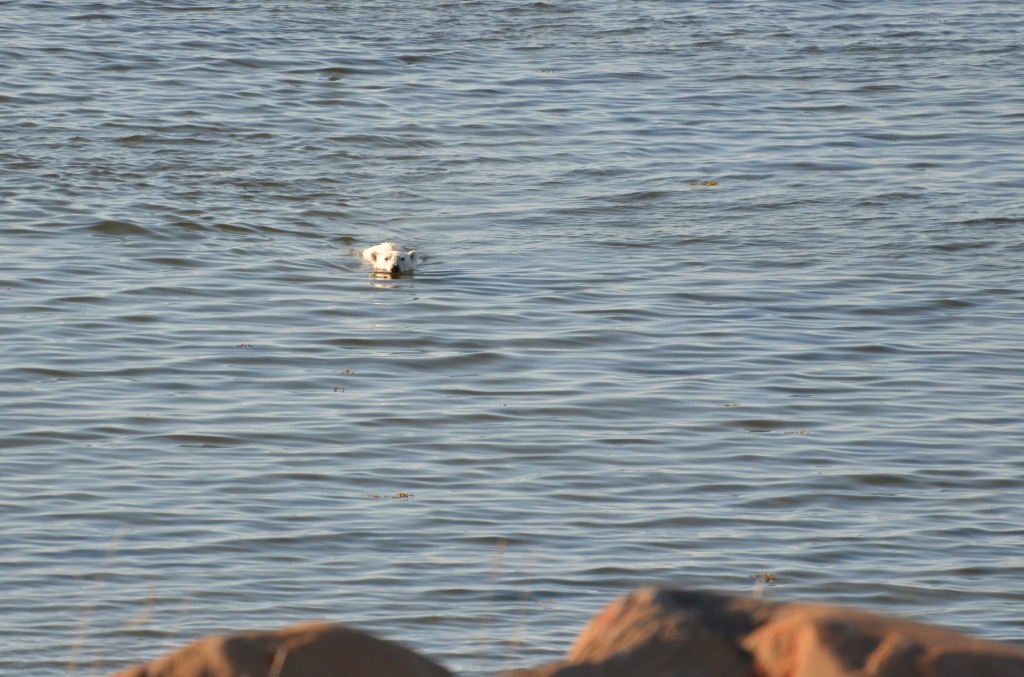
Polar Bear along the coast of Button Bay. Natural Habitat Adventures photo.
Button Bay is a well known beluga whale hot spot in the summer. On the fairly rare occasions when whales are scarce in the Churchill River and mouth of the Hudson Bay, the 20 minute motor over to Button Bay usually produces pods of whales following the capelin run. On the journey by boat or zodiac, there’s always the chance of spotting a polar bear or two nestled along the rocky coast. I have often seen bears dipping paws into the bay or pulling up onto the rocks after a swim.
Button Bay is a little secret gem of the region. the bay itself is considered part of the Nunavut territory.
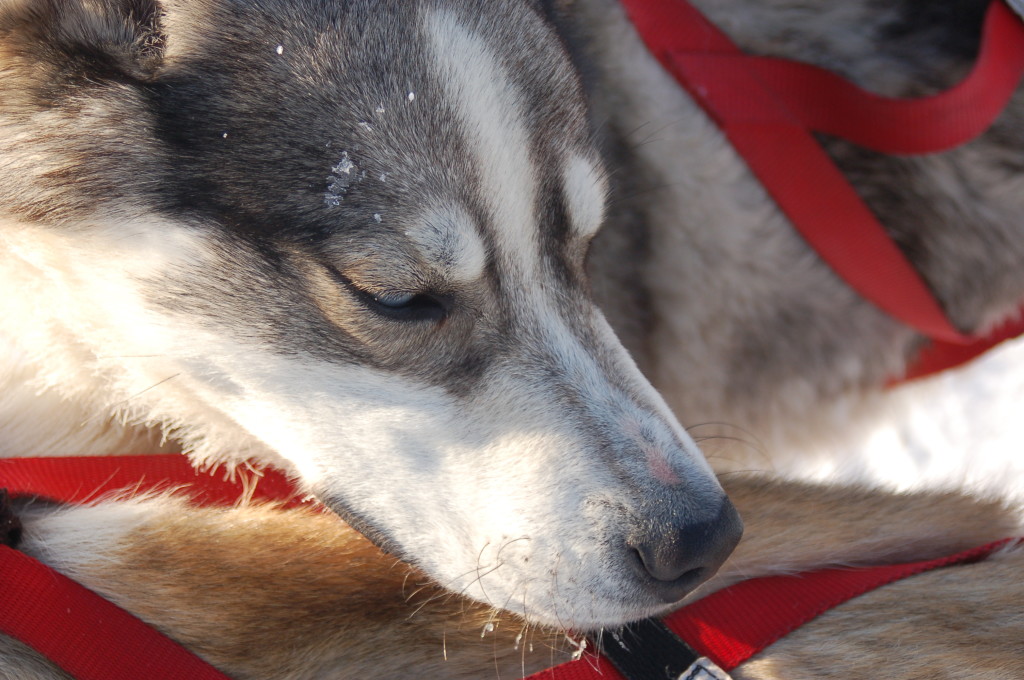
Sled dog taking a quick rest between runs in Churchill. Steve Selden photo.
Check out these amazing photos from Natural Habitat guides in Churchill, Manitoba. In all season’s there are endless opportunities for incredible photos in Churchill. Photography tours run through all the seasons with expert photographers teaching techniques and tricks of the trade. Enjoy these!
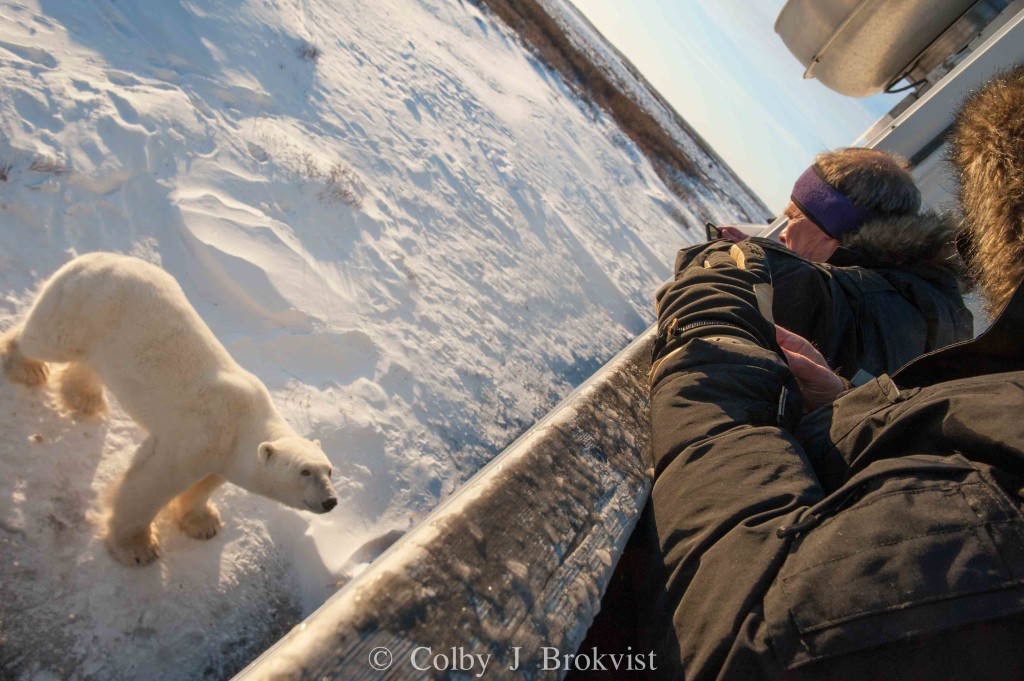
Polar bear at the polar rover. Colby Brokvist photo.
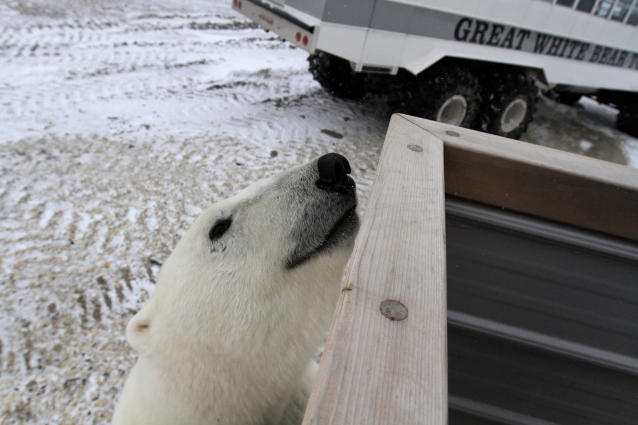
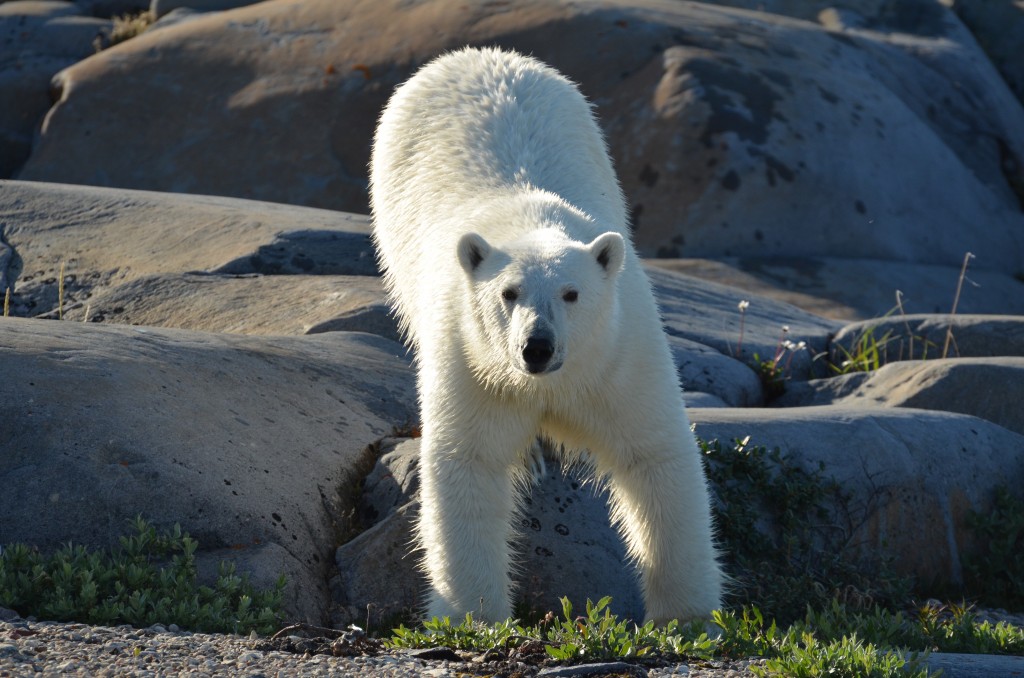
Polar bear looking for a free lunch. Brad Josephs photo.
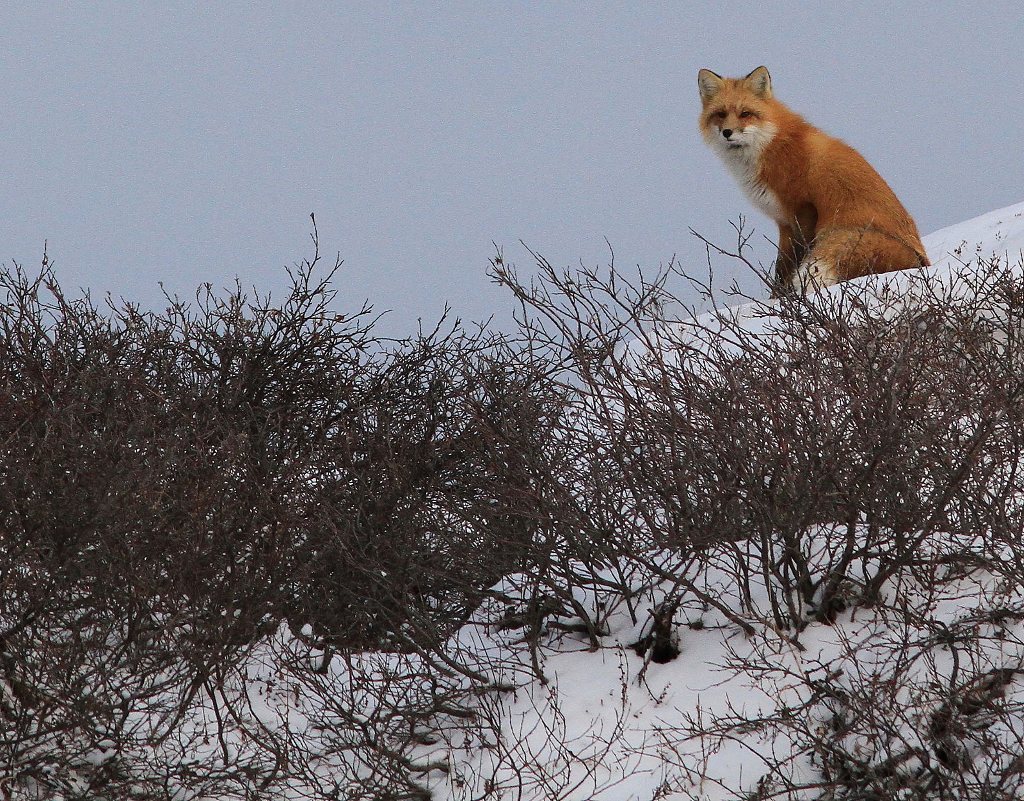
A red fox gazes curiously at some guests. Brad Josephs photo.
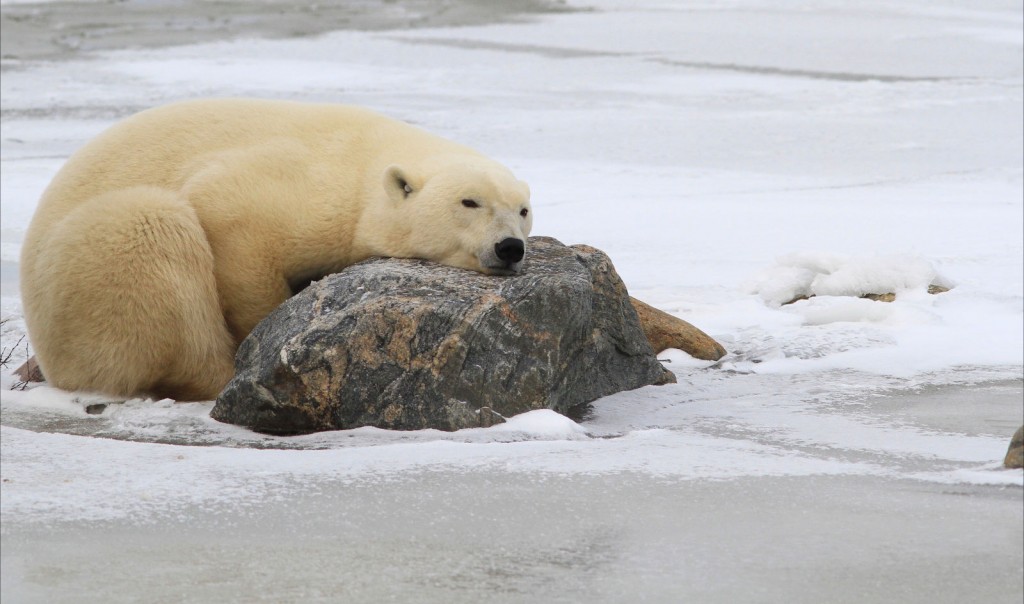
Sleeping bear on the tundra in the CWMA. Brad Josephs photo.
Check out the photo of the month from Churchill. Natural Habitat guide Justin Gibson used just the right exposure settings to capture the lights and stars at once. The foreground boreal forest gives great perspective and makes this an amazing shot!