by Steve Selden | Feb 12, 2015 | Tour News
Travelers to Churchill on Natural Habitat’s northern lights tours have been enjoying clear skies and pristine, powdery white snow in Winnipeg as well as in Churchill these days.
The Hudson Bay and Churchill River are frozen solid and aurora borealis displays have been extraordinary over the frozen tundra around Churchill. This ice coverage chart from the Canadian Ice Service shows the extensive coverage of thick pack ice.

While nights in Churchill are consumed with searching out and viewing aurora borealis, days and early evenings leading up to these exciting excursions are filled with natural and cultural activities unique to the isolated village of Churchill.
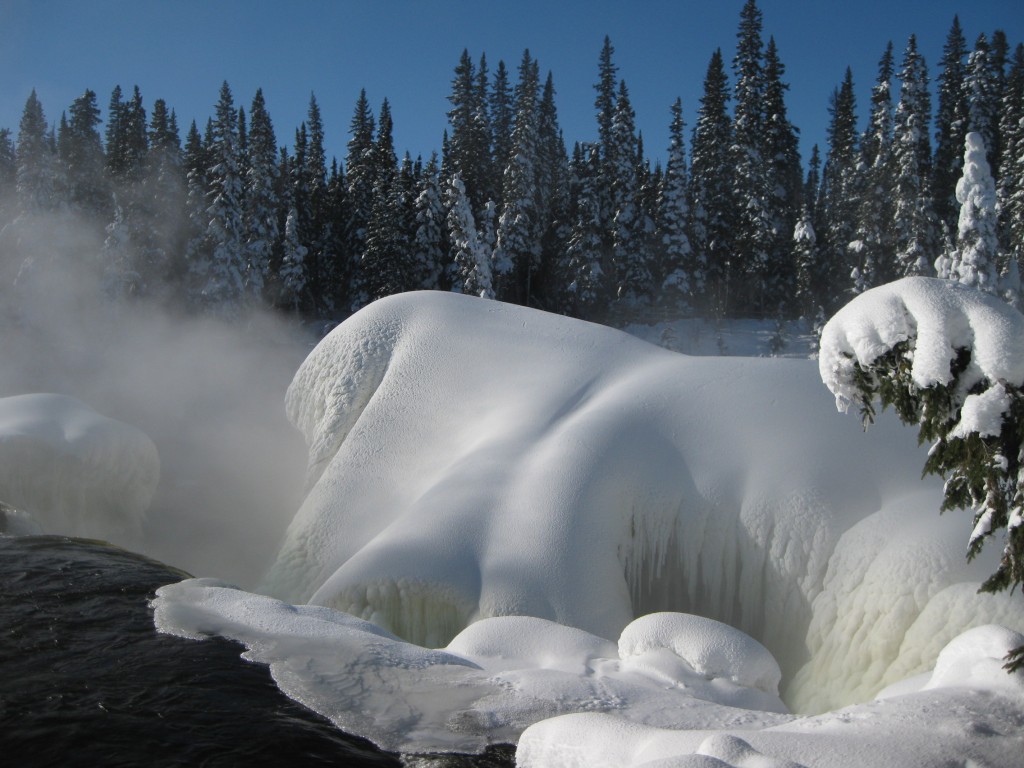
Guide Karen walker’s group had some fun experiences in Thompson en route to Churchill. A Heritage Museum visit and a walk along the Burntwood River set up a thrilling visit to frozen Pisew Falls…always the highlight of the journey through the nickel belt.
Dog sledding with Churchill River Mushers or Wapusk Adventures gives everlasting memories from an experience of a lifetime. Dogs crying with enthusiasm and the stabbing cold seem to “burn” a memory in one’s mind forever. Karen’s group went on an extended run winding in and out of the boreal forest. Travelers spent some time in Kelly’s trapper’s tent and heard stories of the north over coffee or hot chocolate.

Dogsledding in Churchill. Joseph Lin photo.
The optimal night of northern lights in Churchill was a swirling display of greens culminating in a circular pattern over the Hudson Bay. Each night had aurora though this particular night was the pinnacle of the trip.
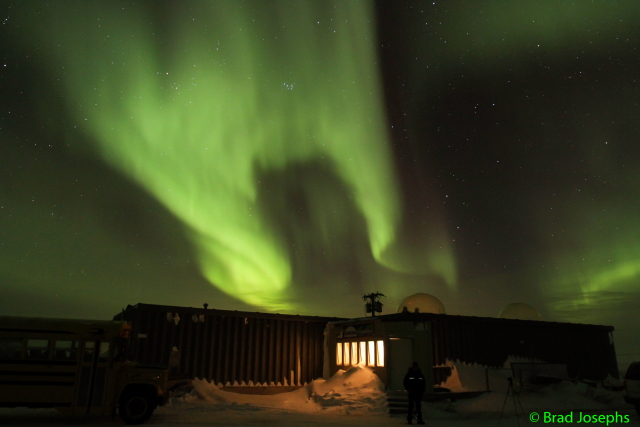
Aurora over the “aurora domes”, a prime indoor spot to photograph the lights. Brad Josephs photo.
Another activity out at the Churchill Northern Studies Center involved snow sampling and analyzing the snowflake from its inception to it becoming a part of the snow pack. Igloo building instruction also is taught by some local experts and the group returns the following night to photograph the igloo with aurora overhead.
by Steve Selden | Feb 10, 2015 | Churchill News
Traveling to Churchill evokes images of pristine white polar bears. This “white” fur blends in with snow and ice to camouflage the animal, not from predators, though more so from prey, such as seals. The black also acts as a receptor for heat absorption from sunlight.

Polar bear with blackish tongue. Natural Habitat Adventures photo.
Each polar bear hair is hollow in core, pigment-free and transparent that scatters and reflects sun-light. The same principle happens with ice and snow.
Just after the molting season in spring and early summer, polar bears appear most white since they are cleanest then. During the seal hunting season out on the Hudson Bay, polar bears absorb oils from the seals and appear yellow in color.
Underneath this thick “white” fur is a black skin layer with four and a half inches of fat below that.

Polar bear skin is black underneath the transparent guard hairs. Brad Josephs photo.
When a polar bear is on land or on the sea ice surface the thick fur coat is what insulates the bear from the cold. However, when polar bears are swimming in water, the thick fat layer is what protects them from the frigid cold. Wet fur is not a good insulator and for this reason mother polar bears tend to keep their cubs out of the water as much as possible. The young bears have not built up the protective fat layer yet. Their fur however is enough to survive the cool spring temperatures.
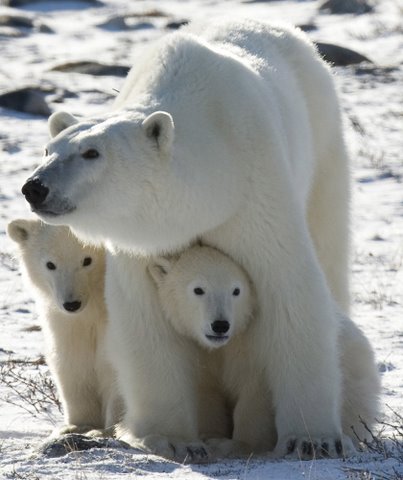
Mother polar bears avoid having their cubs swim in the ocean until they have the fat reserves to protect them. Jonathan Hayward photo.
Another unique characteristic that allows polar bears to keep warm and exude a whitish glow is luminescence. The insides of these transparent guard hairs have tiny bumps that scatter light and create a greater surface for the light across the animals body. The outside of the hairs also collect salt particles from the ocean and act in the same way to refract or scatter the light. Both of these processes cause an overall glow of white in appearance.
by Steve Selden | Feb 9, 2015 | Churchill Photography
Aurora over the “aurora domes”, a prime indoor spot to photograph the lights. Photo Brad Josephs.

Natural Habitat travelers and the aurora borealis in Churchill.
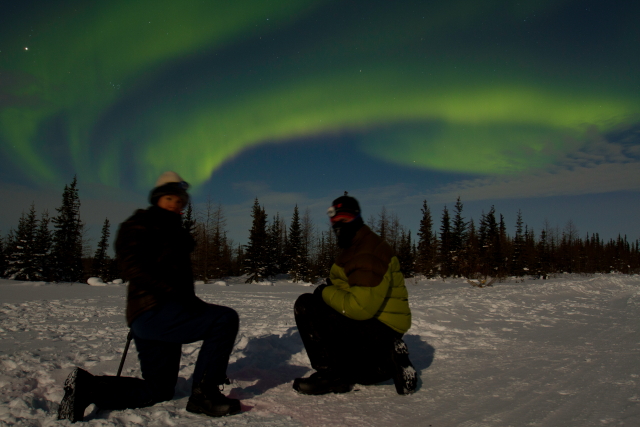
Photographers under the aurora borealis. Photo Brad Josephs.
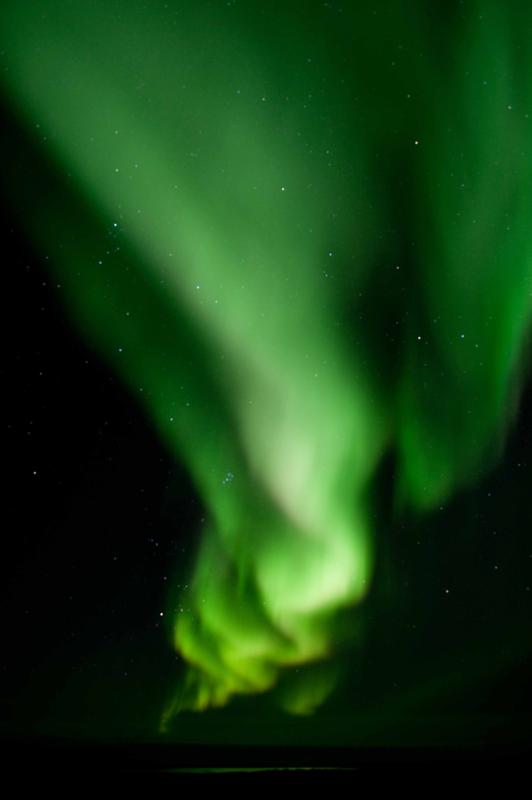
Aurora Borealis in Churchill, Manitoba. Photo Colby Brokvist.
Four iconic aurora borealis photos from Churchill, Manitoba. This year’s Natural Habitat trips have started off with fantastic northern lights viewing. We will have a field report this week from Churchill.
If you want to come see these amazing lights and experience the Arctic culture visit nathab.com today for itineraries!
by Steve Selden | Feb 7, 2015 | Churchill Photography

Natural Habitat Aurora Pod. Boris Minkevich photo.

Natuaral Habitat Aurora pod. Boris Minkevich photo.
The Natural Habitat Aurora Pod is loaded on the train and ready to head north to Churchill,Mb. When it finally comes to rest somewhere on the tundra in the Churchill region, travelers will be able to view the aurora borealis in the comfort of the pod. Stay tuned for seasonal updates through the end of March!

Aurora in the northern Churchill sky. Brad Josephs photo.
by Steve Selden | Feb 2, 2015 | Churchill Photography
Here are five aerial views of Churchill and the surrounding landmarks. Helicopter excursions on Hudson Bay Helicopters are a unique way to view the geography and major landmarks of the Churchill region. Many of the areas can be reached by foot, boat or polar rover though the birds-eye view provides another perspective. Only through this viewpoint can one get an appreciation of the expanse of the land and water in the sub and northern Arctic.
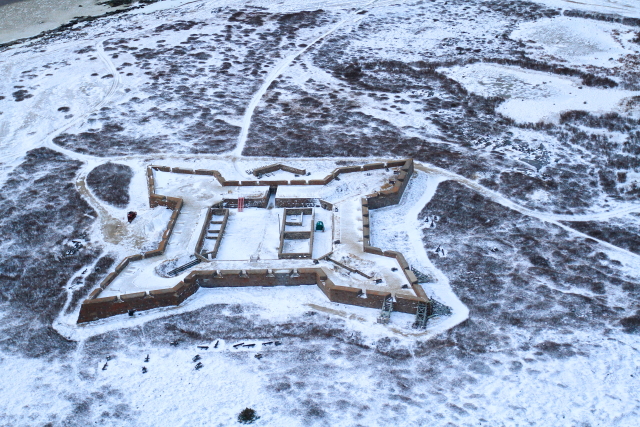
Fort Prince of Wales covered with snow. Brad Josephs photo.
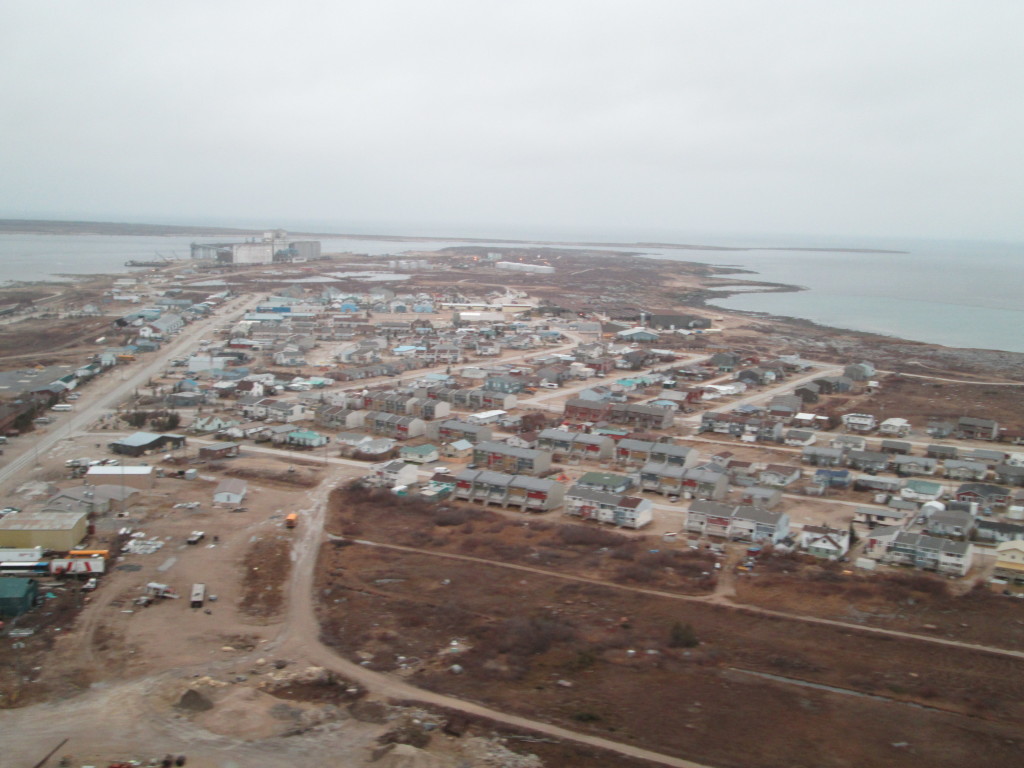
A birds eye view from the helicopter above Churchill. Karen walker photo.
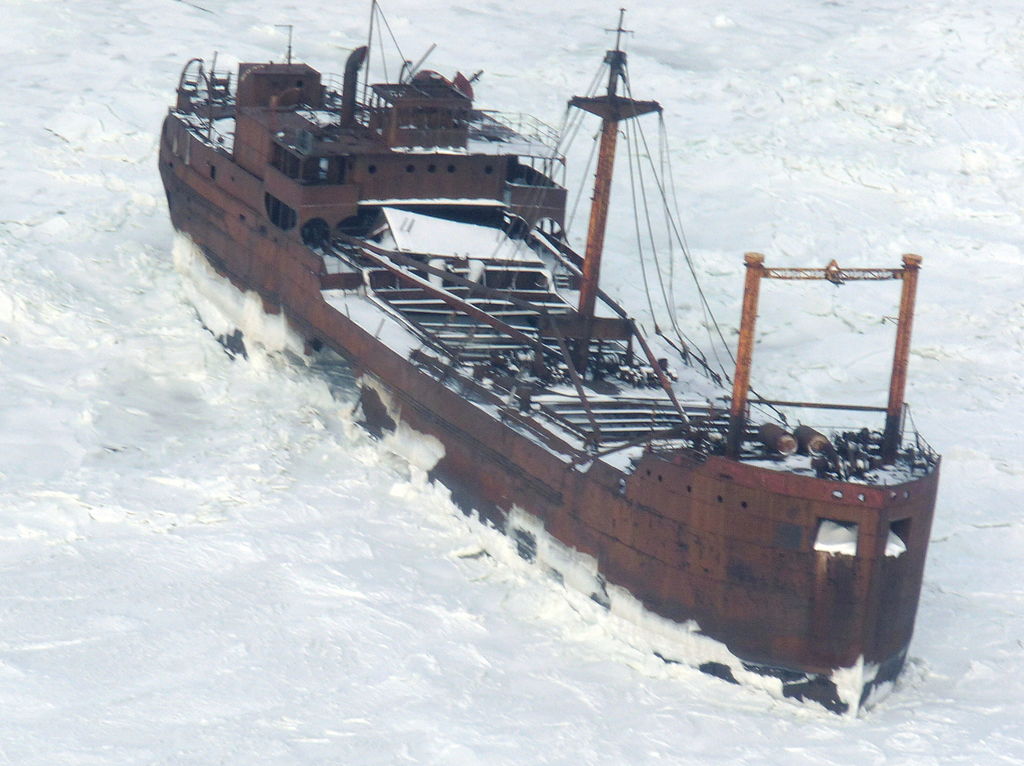
MV Ithaca in Bird Cove, Churchill, MB. Natural Habitat Adventures photo.
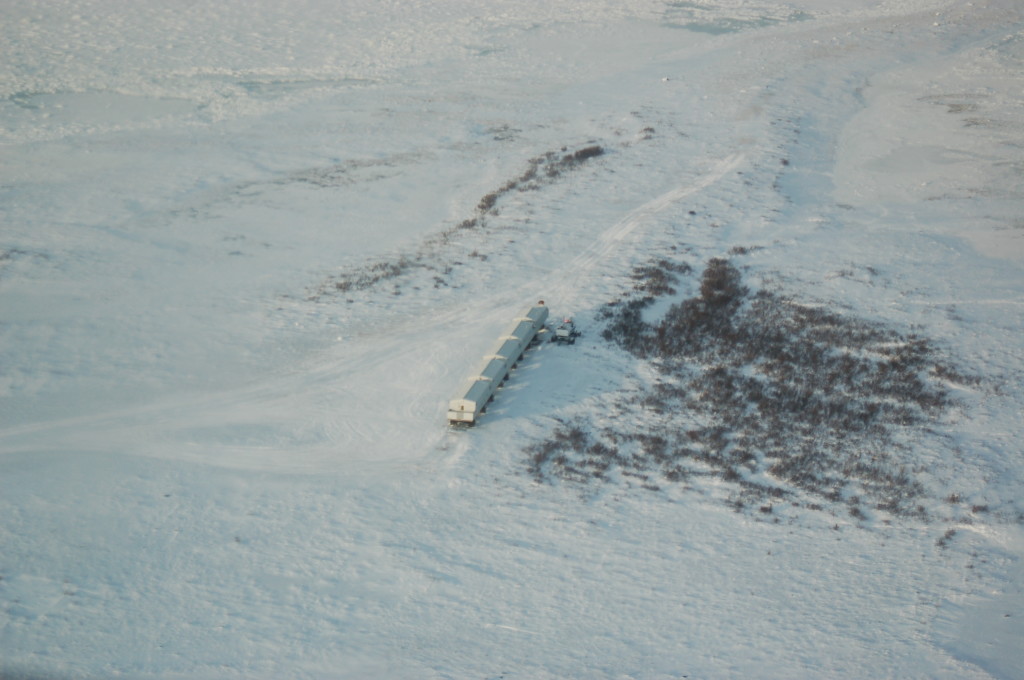
Tundra lodge. Steve Selden photo.
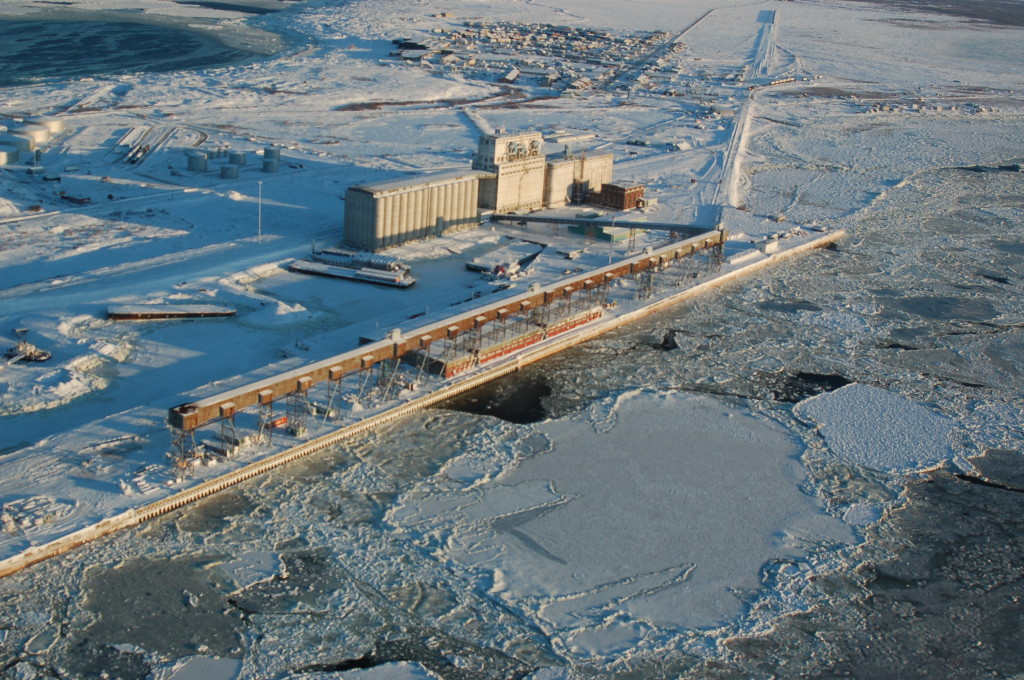
Port of Churchill. Steve Selden photo.
Come see these incredible views from the air as well as all the wildlife of the Churchill region.