A curious polar bear on the pack – ice investigates and then dismantles a spy cam set up on a powered pod. The footage of the bear up close is pretty cool and funny as well. Since there’s generally not much movement out on the ice anything will catch a bears attention. Polar bears sense of smell is strong and any new odors will attract them. Have a look at this funny polar bear video!
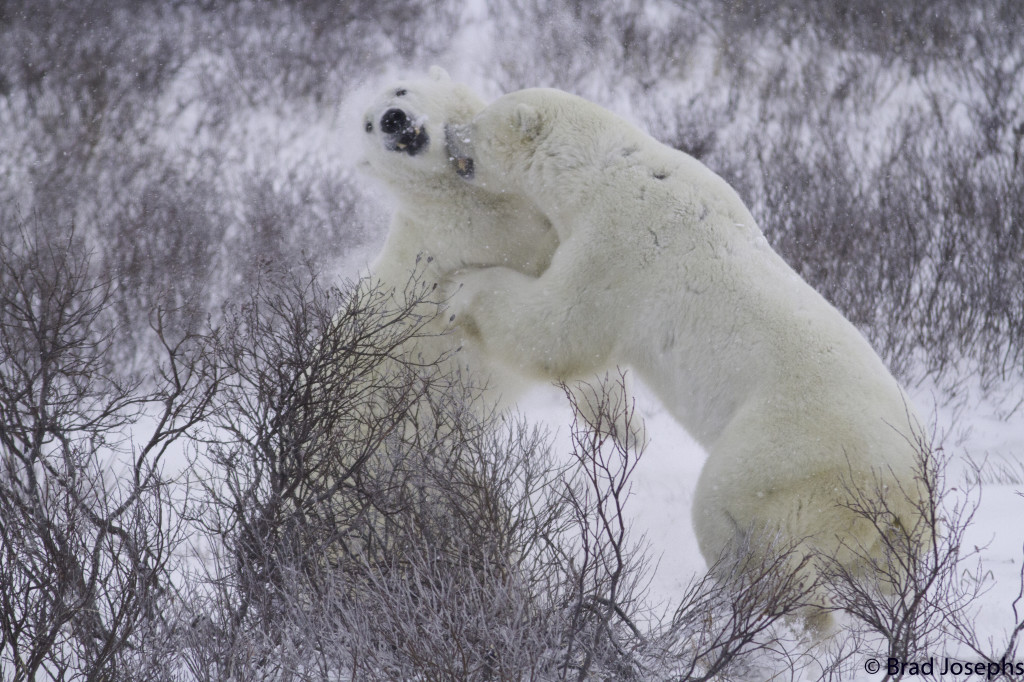
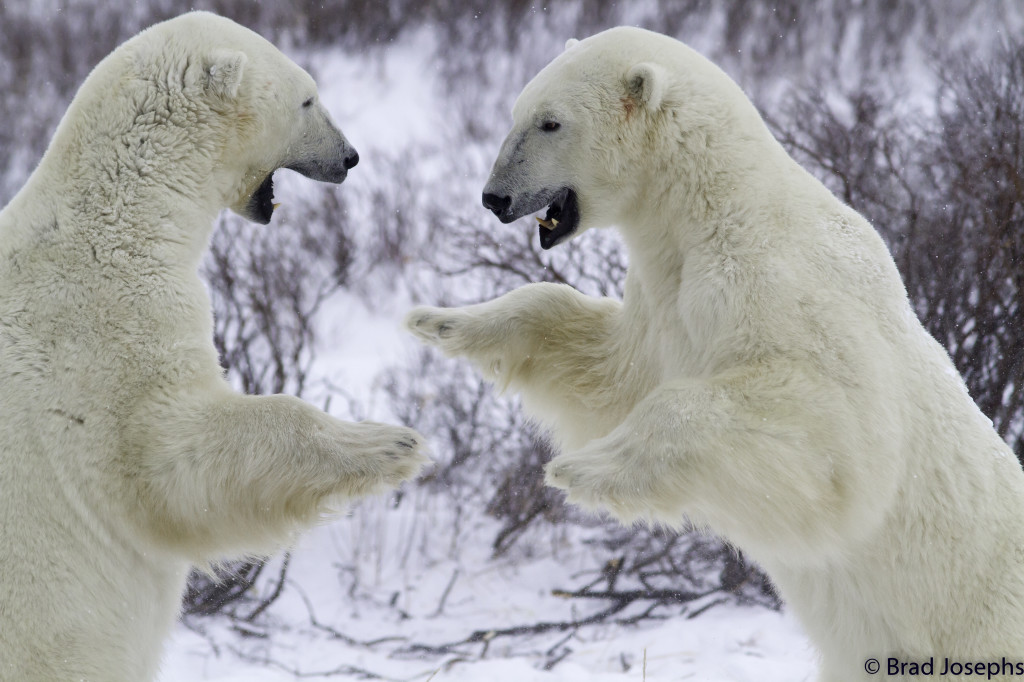
October and November, during polar bear season in Churchill, are the best months to see polar bears squaring off in mock fights. Churchillian’s know that nearly every month is polar bear season and really never let their guard down. During true polar bear season one of the main attractions is sparring usually by adult or sub-adult male polar bears preparing for the long winter on the Hudson Bay ice.
Polar bears sparring in the Churchill wildlife management Area. Brad Josephs photo.
When polar bears venture onto the ice in the Hudson Bay come late November they are prepared for potential confrontations with other bears over territory dominance of mating disputes. Sparring sessions in the Churchill wildlife Management Area and around the Hudson Bay Coast play an integral part in polar bear interactions and communication all year round. A dominance and respect is established through these fights and on the whole most bears know when to stop before serious injury is inflicted. There is also reason to believe the bears use the mock fights as a way to keep fit and alert for the long seal hunting season out on the pack ice.
Some inquisitive Churchill polar bears become frequent flyers on Hudson Bay Helicopters. There’s only one flight route, about 40 kilometers northwest, and chances are the bear will not remember a thing once they come back to consciousness on the tundra.
When bears show a pattern for testing the Churchill town limits and are recurring offenders, they are first incarcerated in the Polar Bear Compound just adjacent to the airport. Subsequent captures either by culvert trap or darting land them there again and they then are flown up along the northwestern coast and released. The hope is they will not return to Churchill during the season though some do. Most times they will be flown out again depending on the capacity of the “jail”, at the time.
This relatively new strategy of dealing with “problem” bears by Manitoba Conservation reflects the importance of eco-tourism in the region. In the old days polar bears would be put down if they were frequent visitors within town limits. These days extreme leniency is given unless the bears pose a critical threat to residents.
These photos show some of the process of airlifting polar bears from Churchill up north.
Conservation officers prepare for a bear lift. Brad Josephs photo.
Hudson Bay helicopter lifting off with a cargo of polar bears. Photo courtesy Natural Habitat Adventures.
A polar bear is airlifted up north from Churchill, Manitoba. Photo courtesy Natural Habitat Adventures.
Polar bear sow and cubs being transported north for relocation. Brad Josephs photo.
A polar bear trap being removed with cargo from Churchill. Photo courtesy Natural Habitat Adventures.
A polar bear is wheeled out from Polar Bear Compound and prepared for flight up north. Photo courtesy Natural Habitat Adventures.
Polar bear ready for lift – off in Churchill. Photo courtesy Natural Habitat Adventures.
The Arctic and sub-Arctic permafrost is frozen soil that for the most part stays that way all year round. Carbon is stored for thousands of years in the matter of dead plants in this frozen substrate. A carbon sink is how we used to refer to it in guiding amazing Churchill Summer trips back in the day. Nearly one quarter of the the land in the Northern Hemisphere is permafrost.
Permafrost contains tons of carbon. Ed Bouvier photo.
By some scientific reports, permafrost could contain over twice as much carbon then the atmosphere already holds. Scientists believe that some of that carbon, with the increased warming in the north, is already escaping into the atmosphere in the form of carbon dioxide or methane gas. This is just the tip of the iceberg figuratively speaking.
The National Academy of Sciences estimates that the permafrost stores 1,800 billion tons of carbon which is double that which is currently held in our atmosphere. And with the warnings of global warming that we have now this statistic is of grave concern.
When plant life dies it’s carbon content is absorbed into the permafrost. Steve Selden photo.
There is no definitive way to measure exactly how much carbon will be released from the ground as temperatures rise though delaying regulation agreements in the world today. Choosing not to dramatically reduce global emissions now is a high risk gamble that seems oversimplified by many. Once the permafrost thaws and the carbon escapes in gaseous form to our atmosphere, we can’t put it back. We can’t just refreeze the ground and turn back the clock. It’s the proverbial unpredictable genie let out of the bottle…we need to be careful what we wish for.
Estimates from projected data charts show that an average of 160 billion tons of carbon could emerge from thawing permafrost by the end of this century. The National Academy of Sciences states we need to keep atmospheric carbon down below 1,100 billion tons in order to limit temperature warming increases to 2 degrees celsius.
Arctic ice coverage has shrunk by 35 per cent over the past several decades. We have seen a stabilization of sorts over recent years even though this past winter had a record low maximum ice coverage. This coupled with other natural warning signs give reason for heightened concern over the permafrost thawing.
A lone polar bear skirts a pond in Churchill on permafrost that holds immense carbon deposits. Eric Rock photo.
Other than the threat to human lifestyle on earth, 11 keystone Arctic mammal species are under threat as well due to melting sea ice and global warming. Polar bears are of course the most iconic of these species. Changes need to be addressed immediately in order to reverse the fate of all these living creatures.
Polar Bear season is still six months away and polar bears for the most part are enjoying a bountiful seal hunting season out on the ice of the Hudson Bay before finding their way back to the familiar shores of the rocky Hudson Bay.
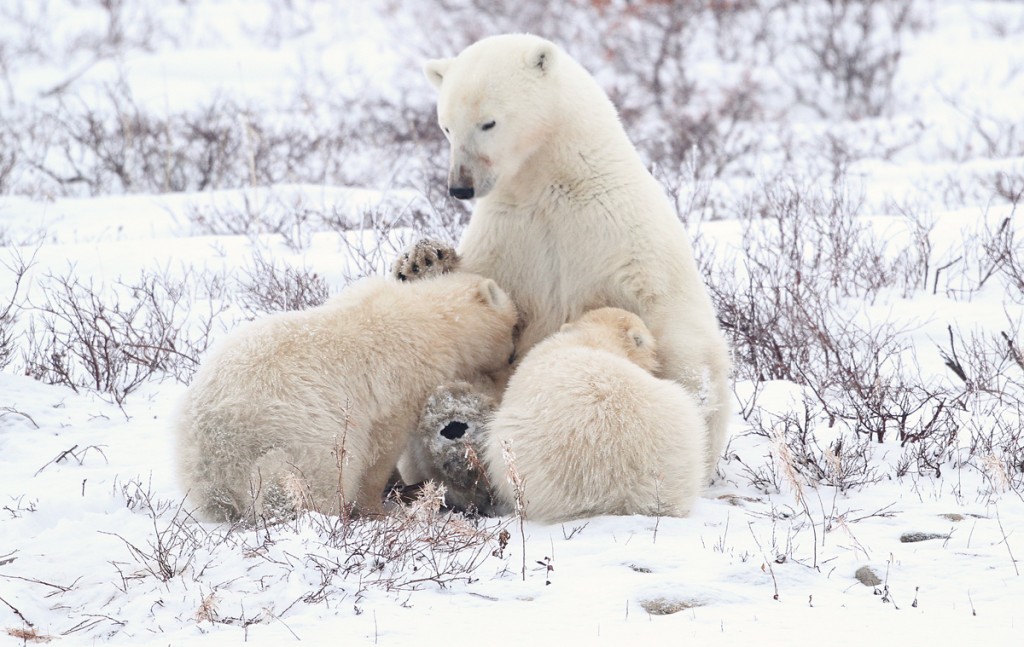
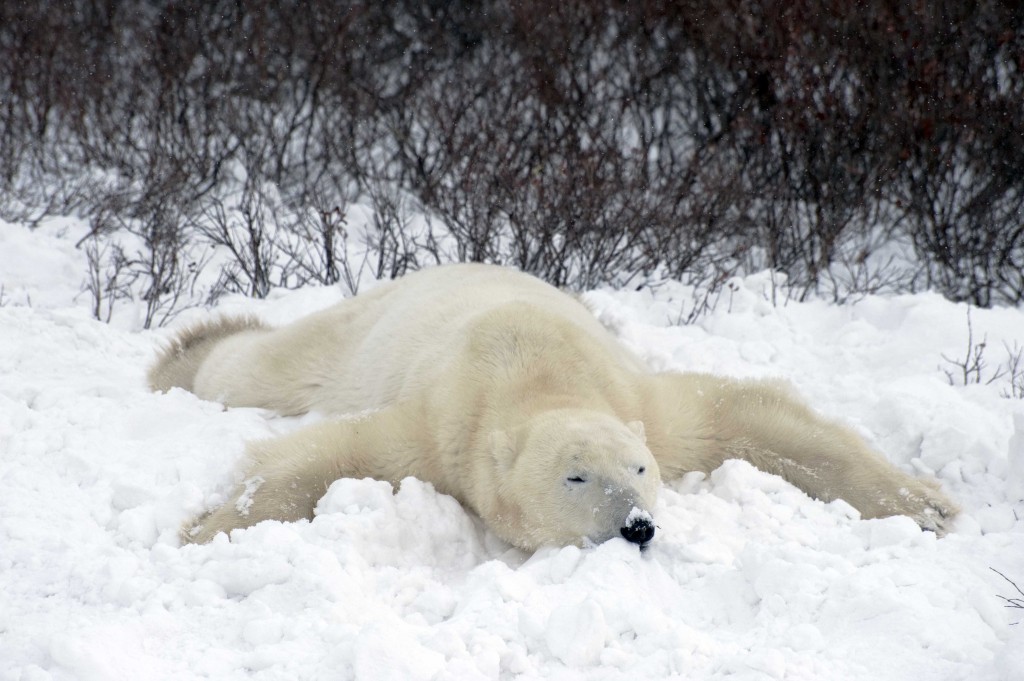
This array of polar bear photos highlights various behavior during the season of October and November. When you visit Churchill during prime season you can witness first-hand all the different interactions at once if you have a bit of luck.